


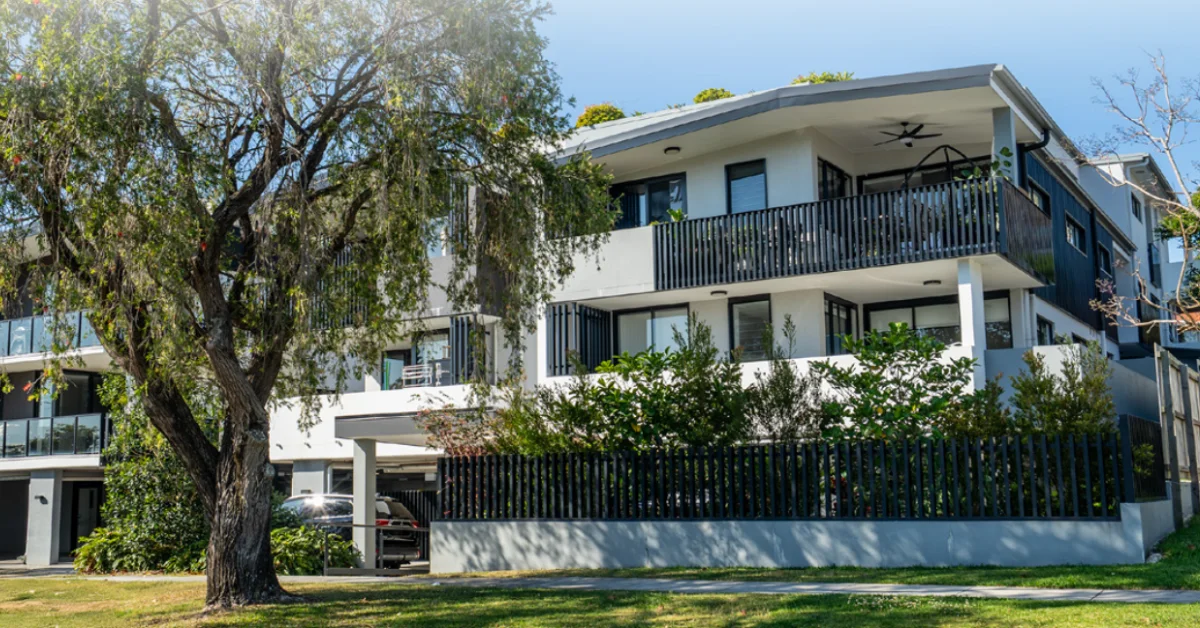
Clayfield and Kalinga are among 18 Brisbane suburbs where planning rules may change to allow more housing close to public transport and local shops, with a community consultation period now open until Friday 20 March 2026.
The More Homes, Sooner initiative proposes updates to the low-medium density residential zone, known as the LMR zone, which covers around 14 per cent of Brisbane’s residential land and includes pockets of both suburbs. The changes aim to make it easier and more affordable to build the kinds of homes that key workers, younger buyers, couples and downsizers are actually looking for, in suburbs they already know and love, rather than pushing growth to the city’s fringes.


New dwelling approvals in LMR zones across Brisbane fell from around 1,100 homes per year to just 445 in 2023, as rising construction costs made smaller infill projects increasingly difficult to stack up financially. The proposed changes are designed to reverse that trend.
What Could Change in Clayfield and Kalinga
The LMR zone in Clayfield and Kalinga currently allows for two to three storey buildings on lots of at least 400 square metres, accommodating townhouses, duplexes, row houses and small apartment buildings. Under the More Homes, Sooner proposals, the baseline height allowance across LMR zones would rise to a consistent three storeys. Properties within 400 metres walking distance of a high-frequency public transport stop or a shopping centre, classified as Key Locations, would be eligible for up to four storeys on lots of 800 square metres or more.

Minimum lot sizes are also proposed to change, dropping to 120 square metres in some circumstances to enable small freehold houses and terrace-style homes on compact blocks. Low density residential properties within 300 metres walking distance of a shopping centre would also become eligible for subdivision into 300 square metre lots, expanded from the current 200 metre threshold.

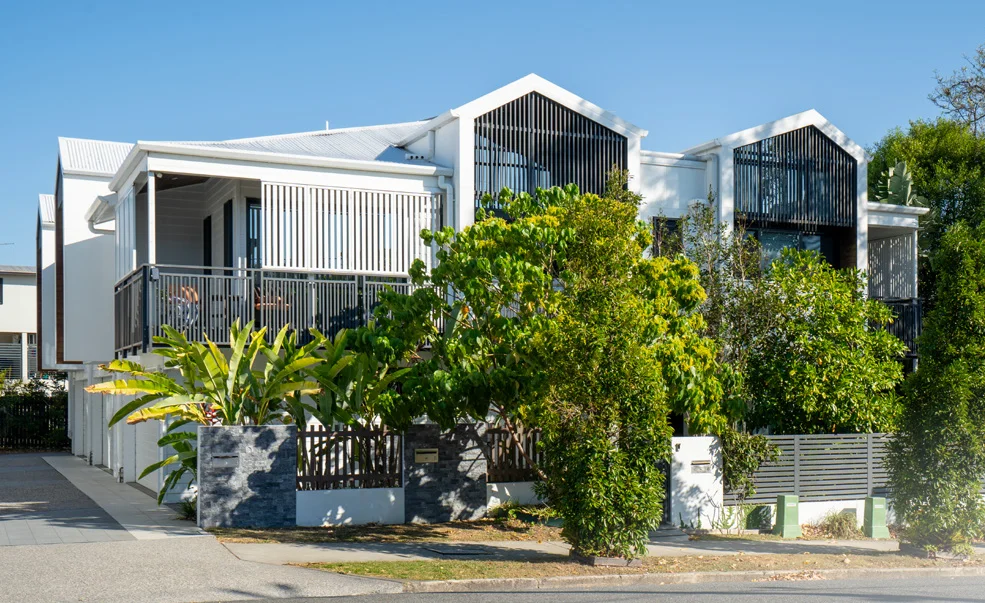
On-site car parking requirements would be adjusted citywide to reflect declining car ownership and improved access to public transport. A two-bedroom unit currently requires two car spaces; under the proposed changes that would reduce to 1.5 spaces, or 1.2 spaces in Key Locations. The planning document notes that a single car park space can add up to $82,000 to the cost of a unit outside the inner city, and that reducing this requirement directly improves affordability for buyers and renters.
Neighbourhood Character Protected by Design
The changes come with design safeguards built in. Minimum setbacks from existing freestanding houses, maximum building footprints, and requirements for street tree planting are all part of the proposed framework to ensure new development integrates into existing streetscapes rather than overwhelming them.
Planning consultants from Brisbane firm Therefor Group have noted that character-protected areas in suburbs with heritage overlays are unlikely to be affected. In Clayfield and Kalinga, where well-maintained Queenslander homes and post-war cottages define much of the residential streetscape, that distinction matters. The LMR zone typically occupies pockets near transport corridors and centres rather than the broadest residential streets, meaning character areas and designated heritage precincts sit largely outside the scope of the proposed changes.



More than half of all Brisbane households are made up of single people or couples without children, yet 71 per cent of the city’s homes have three or more bedrooms. The initiative responds directly to that mismatch, aiming to create housing pathways for people at every stage of life within established, well-serviced suburbs.
How to Have Your Say
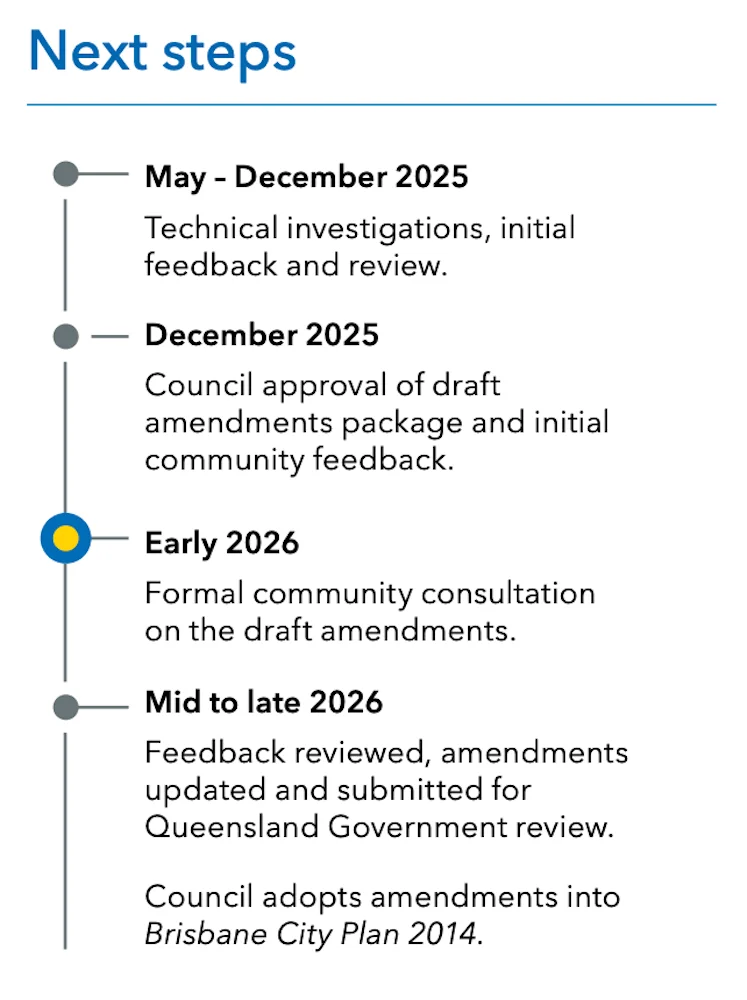
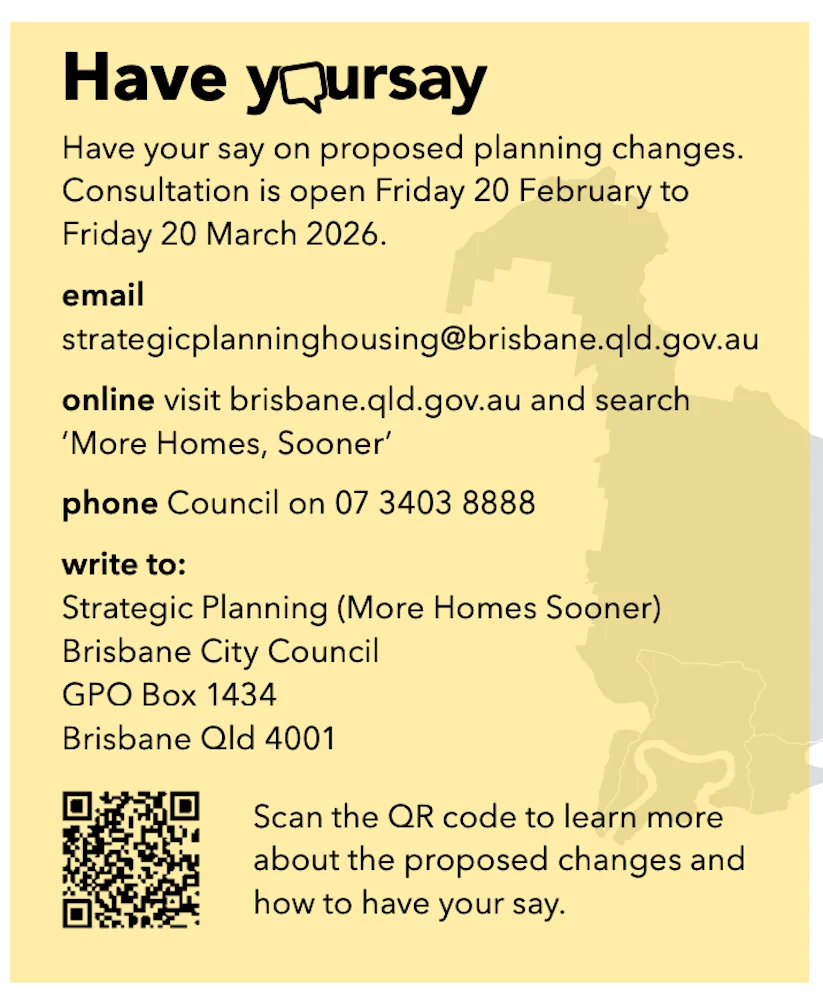
Formal community consultation on the More Homes, Sooner draft amendments is open now and closes Friday 20 March 2026. Residents can share their feedback online at brisbane.qld.gov.au by searching “More Homes, Sooner”, by emailing strategicplanninghousing@brisbane.qld.gov.au, or by calling 07 3403 8888. Written submissions can also be posted to Strategic Planning (More Homes Sooner), BCC, GPO Box 1434, Brisbane QLD 4001.
Following the consultation period, feedback will be reviewed and amendments updated before being submitted for state review and formally adopted into Brisbane City Plan 2014. That process is expected to conclude by late 2026.
Published 23-February-2026.