
Wooloowin State School: A Model School’s Journey of Resilience and Growth

Did you know that Wooloowin State School is the first primary school in Queensland to offer woodworking and domestic science classes to its students?


From its establishment in 1914, Wooloowin State School has gone through significant expansion, interesting developments, and numerous challenges (even a tragic fire incident) and come through it all with remarkable resilience.

Here are some things to know about Wooloowin State School:

A Model School Borne Out of ‘Educational Experimentation’

In the early 20th century, Wooloowin emerged as a rapidly expanding suburb due to its proximity to the railway station, which opened in 1889.

Recognising the need for quality education, the Wooloowin Progress Association and school building committee spearheaded the establishment of Wooloowin State School.

Wooloowin State School was one of the most expensive schools to be built by Queensland Public Works. Its establishment came at a time when Queensland was undergoing an “educational experimentation” and a reworking of the curriculum.

With its construction occurring in four stages between 1914 and 1934, the school resolved to be a model institution in terms of curriculum, staff, facilities, and progressive education.

First Primary School to Teach Woodwork and Domestic Science

Wooloowin State School
Photo Credit: National Library of Australia

The first section of Wooloowin State School was completed in 1914, comprising two single-story brick wings with four large classrooms, spacious verandas, and modern furnishings. In subsequent years, additional classrooms were constructed, bringing the total count to six by 1918. 

Employing the finest teachers in the state, the school eventually introduced woodworking and domestic science classes. It was the first primary school in Queensland to teach these subjects to the students.

Rapid Growth in the Early 20th Century

Wooloowin, originally part of Lutwyche, flourished as a suburban community in the late 19th and early 20th centuries.

The extension of the tramline in 1913-1914 played a crucial role in the area’s development. Wooloowin State School had to undergo more expansions, including a swimming pool, to fill the demand for education. These expansions in 1925 and 1934 reflected the school’s commitment to holistic education and catering to the growing population of the working-class suburb. 

Resilience in the Face of Adversity

In 2003, tragedy struck Wooloowin State School when an arson attack damaged several key buildings, including the office, pre-school, tuckshop, School’s Out program, and library.

Despite the setback, the school’s heritage listing prevented the demolition of the damaged structures. Instead, the community rallied together, and the school was carefully repaired and rebuilt at a cost of A$4 million. Temporary classrooms were erected, and in September 2004, Wooloowin State School proudly reopened its doors.

Manners Maketh Man

The restoration process brought about several improvements, including the refurbishment of the main block, library, and pre-school. Additionally, a new tuckshop and uniform shop were constructed near the pool, further enhancing the school’s facilities. School’s Out program, initially located under the library, found a temporary home in one of the demountable classrooms.

Wooloowin State School stands as a testament to the power of community and resilience. From its early days as a model school at the forefront of education to the challenges faced during the 2003 fire, the school has evolved and adapted while preserving its rich heritage. 

With the motto “Manners Maketh Man” guiding its students, Wooloowin State School continues to provide quality education and shape the lives of generations to come.


Published 17-August-2023

$18 Million Lawsuit Filed Over Asbestos Contamination at Greville Wooloowin Development

The Greville Wooloowin development, an ambitious “urban village” project situated in Brisbane’s north, has been thrust into an $18-million legal battle due to a shocking asbestos discovery that has brought construction to a grinding halt. 


The project, led by Dunland Property Pty Ltd, was intended to bring a touch of elegance to the city’s landscape, but now finds itself at the epicentre of a lawsuit against environmental consultants accused of negligence.

Dunland Property Pty Ltd, the owner of the development site at 60 Bridge St Wooloowin, has launched a lawsuit against MACH1 Environmental Pty Ltd and Butler Partners Pty Ltd in the Supreme Court.

The lawsuit alleges that these environmental consultants negligently cleared the contaminated site for construction, leading to costly delays and financial losses.

The legal claim, filed on 14 July 2023, highlights that Dunland relied on assurances from MACH1 Environmental and Butler Partners that the Cedar Woods’ townhouse project, known as Greville Wooloowin, was safe from contamination and suitable for construction.

However, once construction commenced in early 2021, asbestos was discovered in the soil, prompting a complete halt to work.

Greville Wooloowin
Photo Credit: Greville Wooloowin/Facebook

Subsequent investigations conducted in April and May revealed even more asbestos contamination on the site. To rectify the situation, Dunland had to remove a staggering 11,000 cubic meters of soil tainted with asbestos between June and November 2021, incurring significant costs. 

By the time construction could resume, the project’s budget had ballooned from $15.3 million to $24.6 million for the townhouses, which were originally planned to be finished by October 2022. The consequences rippled through the project, forcing Dunland to cancel sales contracts for the terrace homes and incurring substantial financial setbacks. 

The company is now seeking damages totaling $18.2 million, which encompasses increased construction costs, commissions paid to real estate agents for Francis Apartments, sunk marketing costs, and more.

Dunland asserts that the negligence caused the project’s crippling delays, costs, and cancellations.

The claim alleges that Butler Partners provided misleading information in their “contaminated land investigation” report, deeming the site suitable for unrestricted use and suggesting its removal from the state government’s environmental management register. Similarly, MACH1 Environmental’s report stated that “no contamination remains on-site.”

These reports were pivotal in the site’s removal from the environmental management register in October 2019. However, subsequent asbestos discoveries prompted the site’s relisting in June 2021. 


Greville Wooloowin’s development includes 49 medium-density lots, 12 medium-density lots and two high-density apartment blocks, divided into four stages. Whilst the legal battle unfolds, the Greville Wooloowin development remains mired in uncertainty as no defence has been filed and no hearing date set, as of press time. 

Published 7-Aug-2023

Former Sisters of Mercy Convent in Wooloowin Designated for Childcare Centre Development

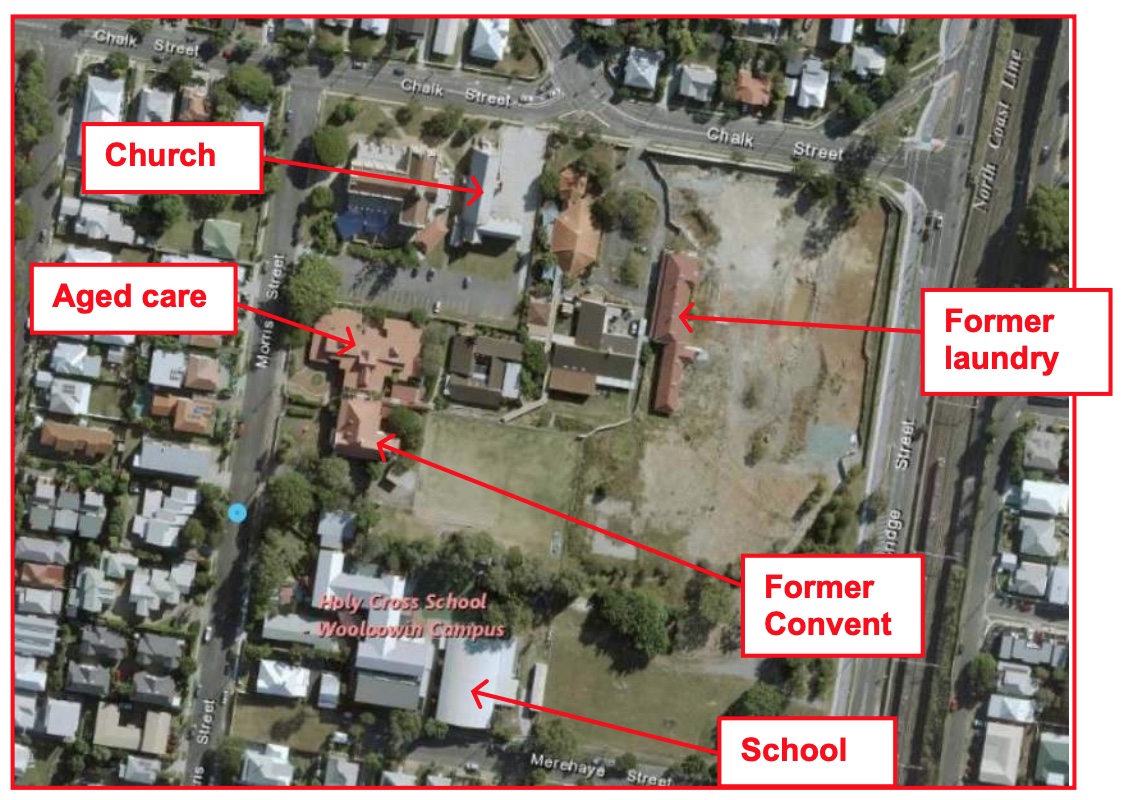
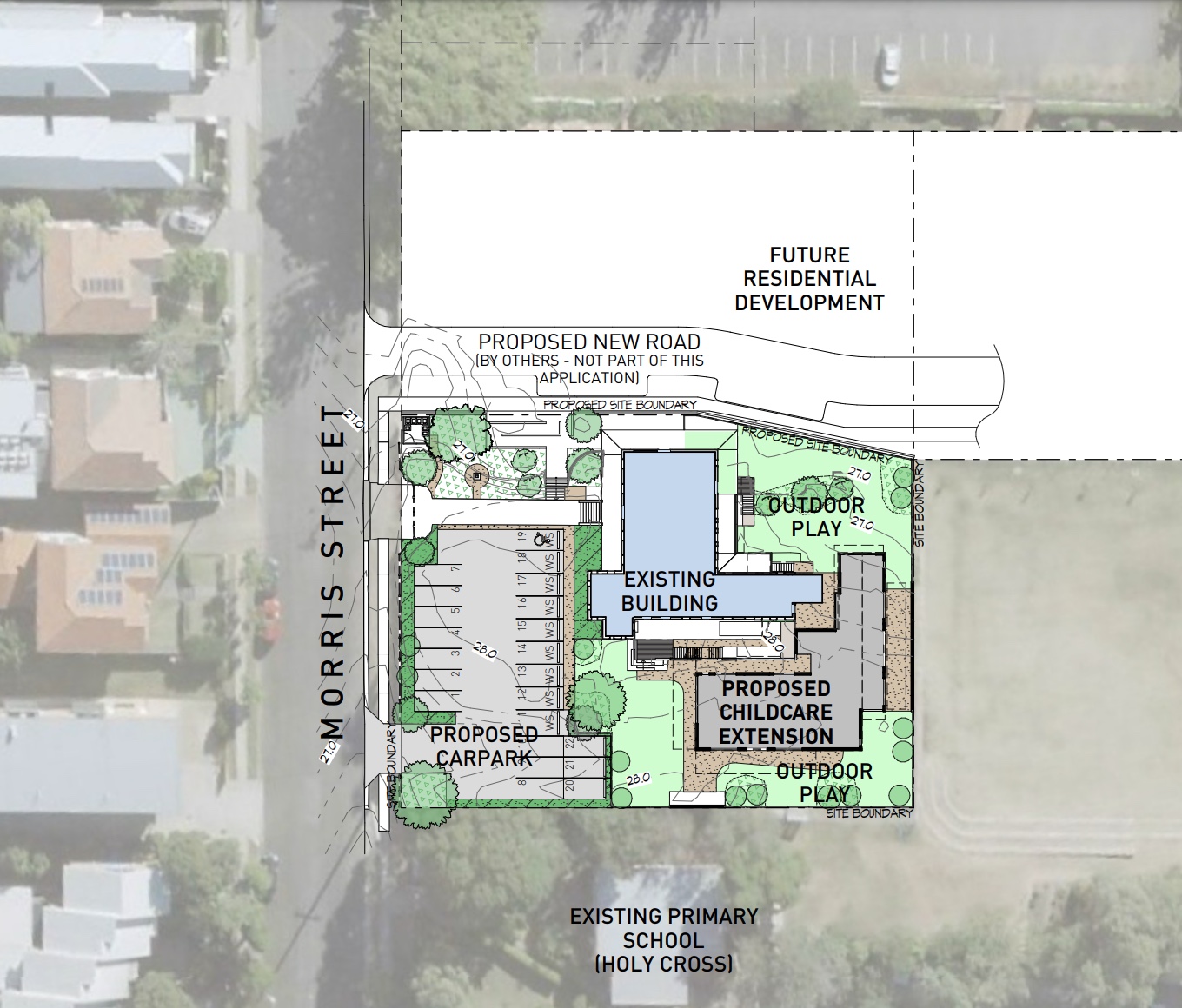
A portion of the historic Sisters of Mercy site in Wooloowin has been designated for development as a childcare centre. Changes could be made to the structure of the former convent.


Located on Morris Street, developer De Luca Corporation Pty Ltd detailed plans to build the facility that will accommodate 110 children via DA A005776689, lodged with Brisbane City Council on 16 July 2021.

The development is in line with Cedar Woods’ townhouse project, dubbed Greville Wooloowin, in the same Sisters of Mercy site covering sections of Bridge, Chalk and Merehaye Streets. 

De Luca Corporation Pty Ltd said that it’s negotiating to buy the convent’s land for the childcare centre from Dunland Property Pty Ltd, which owns Cedar Woods. The facility will stand next to the aged care accommodations. 


Highlights

  • De Luca Corporation Pty Ltd plans to build a childcare centre in a section of the Sisters of Mercy site in Wooloowin.
  • The developer intends to buy the land where the convent stands from Dunland Property Pty Ltd, the owner of Cedar Woods, which bought the Sisters of Mercy site in 2015 for residential development.
  • Some changes to the convent’s structure will be undertaken if the development application receives approval. 

The former Sisters of Mercy property is a Local Heritage Place which was sold to Dunland Property Pty Ltd. in 2015. The convent has been empty since the purchase with the doors and windows boarded up to prevent trespassers. 

In 2017, Council approved plans for the redevelopment of the sprawling Sisters of Mercy site as an aged care and residential facility. Greville Wooloowin has begun its first stage of civil works this year, where some of the townhouses have been pre-sold.  

Photo Credit: Development Application/BCC

“As a consequence of the change of use of the heritage building some minor heritage fabric is proposed to be demolished and the remaining heritage fabric will be restored,” the developers stated. 

“There will also be some alterations and extensions to the heritage building. There is a new single storey building proposed to the south and east of the heritage building which will provide the additional accommodation required for the Childcare Centre.”


De Luca Corporation Pty Ltd also intends to incorporate 22 car parking spaces, play areas at the rear of the building, and pedestrian access from Morris Street to the car park. 

In November 2020, the developer met with Council officers to discuss its intention for the facility before lodging the application. As a Local Heritage Place, residents may appeal this project but, as of press time, Council has not yet set a public notification date for submissions.

War Survivor Celebrates 100th Birthday in Wooloowin

Wooloowin resident Ann Damen turned 100 years old on the 18th of Dec 2019. After nine children, 23 grandchildren and several great-grandchildren, Ann acknowledges that she’s had a good life as a Dutch native living in Australia. Her life, however, could have been cut short during the Second World War.

Ann was born in The Hague and still remembers the time the Germans occupied the Netherlands some seven decades ago. An airstrike from the British army retaliating against the Germans destroyed the home she shared with her husband and children. It was a miracle they all survived.

“I remember, but not fondly, we went through the war. With all our kids we didn’t have much to eat. It was very hard, but we made it,” she shared. 

Photo Credit: Supplied


Ann, who lost her mother to tuberculosis at two years old, met her husband Pieter as a teenager. They married at the age of 20 years old in 1939, just before the Second World War broke.  

In 1950, Ann and Pieter decided to uproot their lives in Australia. 

“Because we had nine kids, and especially with six boys I was thinking, ‘Holland is lovely and beautiful but it’s very small so maybe it’s better if we go somewhere else’, so we decided to go to Australia,” Ann said. 

The move took Ann some time to get used to. Before the war, she and her husband used to enjoy a leisurely walk at night in Holland. However, her neighbours in her new community would go to bed early with the streets so dark and quiet in Australia.

She also missed Holland, especially during the snow at Christmas time. Before long, however, she got comfortable with the nice and warm weather of her adopted country. 

Photo Credit: Supplied


Sarina, one of Ann’s daughters, said that their mother’s love for her Australia sways with her love for her homeland. 

“When mum watches the Olympics, tennis or swimming on the TV she always barracks for Australia, but if there are no Australians in the race she then barracks for the Netherlands,” Sarina said. 

Until she was 99-years-old, Ann lived on her own in a unit in Newmarket. She has since moved to the Carinity Clifford House where she spends her time gardening, watching movies, singing and listening to music, playing Scrabbles and puzzles, and reading books by Rosamunde Pilcher and Cathy Kelly.

Photo Credit: Supplied

Carinity, established in 1949, is a non-profit Christian organisation with a mission to provide an affordable retirement community for the aged, the homeless and the struggling families.  It has seven retirement lifestyle villages and 11 aged care centres spread out across Queensland, including the Clifford House in Wooloowin. 

The Clifford House specialises in memory assisted living with the residents given access to. a team of medical experts like a GP, physiotherapist, podiatrist, dentist. The centre also has its own library, chaplain, hairdresser, and a community hall for various group activities and entertainment.