A 33-year-old Clayfield man has been arrested after allegedly breaking into a Bonney Avenue residence in Clayfield and stealing a black Mercedes Benz C250 Coupe in the early hours of May 6th.
According to Queensland Police Sergeant Jodie Murray, the man is accused of entering the home through an unlocked side door around midnight and taking cash, keys to the Mercedes, and other property from inside.
He then allegedly stole the luxury vehicle, with Queensland registration plates 511 ZZT, from the driveway before fleeing the scene.
Just over an hour later at 1:15 am, police reported locating the stolen Mercedes being driven suspiciously on Balmain Street in the nearby suburb of Wooloowin after members of the public reported the vehicle.
The 33-year-old Clayfield man was arrested and has been charged with entering a dwelling to commit an indictable offence, unlawful use of a motor vehicle, and obstructing police.
He is scheduled to appear before the Brisbane Magistrates Court on June 7th.
Alfred Lutwyche’s journey to becoming a prominent figure in Queensland was not without its trials. Before his legal career took off, he faced a life-altering ordeal—a shipwreck near the remote Amsterdam Island in the Southern Indian Ocean.
Lutwyche, along with his fellow passengers, found themselves stranded on this desolate island, stripped of their possessions and facing an uncertain future. The shipwreck was a test of resilience and survival, one that Lutwyche passed with flying colours.
The details of his survival and eventual rescue remain shrouded in some mystery. Still, the fact that he overcame this adversity and went on to achieve great things speaks volumes about his character and determination. This harrowing experience likely shaped his perspective and perhaps even fueled his ambition, ultimately leading him to play a pivotal role in the development of Kalinga and the legal landscape of Queensland.
Lutwyche’s story, much like the suburb he helped establish, is one of resilience, transformation, and enduring impact. Born in London in 1810, he embarked on a legal career that led him to Australia in the mid-19th century. But his journey was far from smooth sailing. His experiences due to the shipwreck stripped him of his possessions but not his determination.
Upon reaching Sydney, Lutwyche’s legal acumen quickly gained recognition. He was appointed Solicitor-General of New South Wales and later became Queensland’s first Supreme Court judge. Yet, his influence extended beyond the courtroom. He acquired vast tracts of land in the area now known as Kalinga, where he built his stately residence, Kedron Lodge.
Lutwyche’s vision for Kalinga was not merely residential. He envisioned a community anchored in faith and education. In 1865, he donated land for the construction of St. Andrew’s Anglican Church in Brisbane City, a landmark that still stands as a testament to his commitment to the spiritual well-being of the community. He also played a pivotal role in establishing the local school, ensuring that future generations would have access to quality education.
The judge’s legacy is not confined to bricks and mortar. His philanthropic spirit, his dedication to justice, and his unwavering belief in the potential of Kalinga continue to inspire residents. The suburb’s name itself, derived from the Aboriginal word “Kallingga,” meaning “good,” reflects the values Lutwyche instilled in this once-rural outpost.
Today, Kalinga is a thriving suburb, a blend of historical charm and modern amenities. Yet, beneath its contemporary facade lies the indelible mark of Alfred Lutwyche. His story is a reminder that Kalinga is not just a place on a map; it’s a living testament to the enduring power of vision, resilience, and community spirit.
EJ Station House, a unique restaurant and bar that presents a relaxed yet refined dining experience to both locals and visitors, has swiftly made its mark since its debut in February 2024.
The new hub specialising in wine, tapas & gelato bars is found in the lively communities of Eagle Junction, Wooloowin, and Clayfield. It has occupied the building that used to be Clayfield Grocery Store.
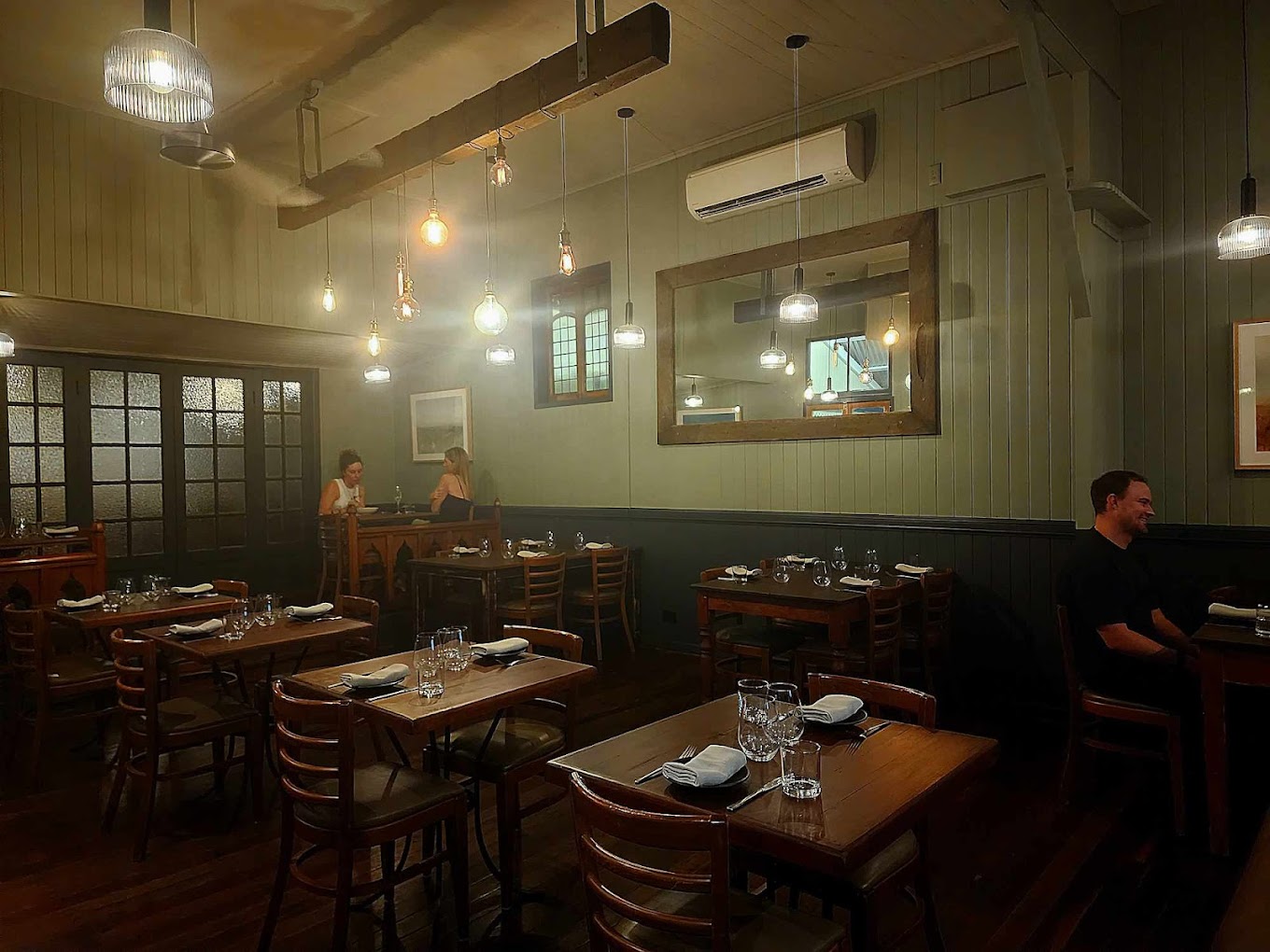
The exterior is covered with a basic black and white wooden colour. Upon entry, patrons are greeted by an inviting ambience, with soft lighting, wooden textures and greens in the pots. The place blends modern interior with rustic charm, perfect for chilling out during the day and family dinners at night.
Photo Credit: EJ Station House/Facebook
EJ Station House takes pride in its perfectly curated diverse menu that locals and visitors can come back to.
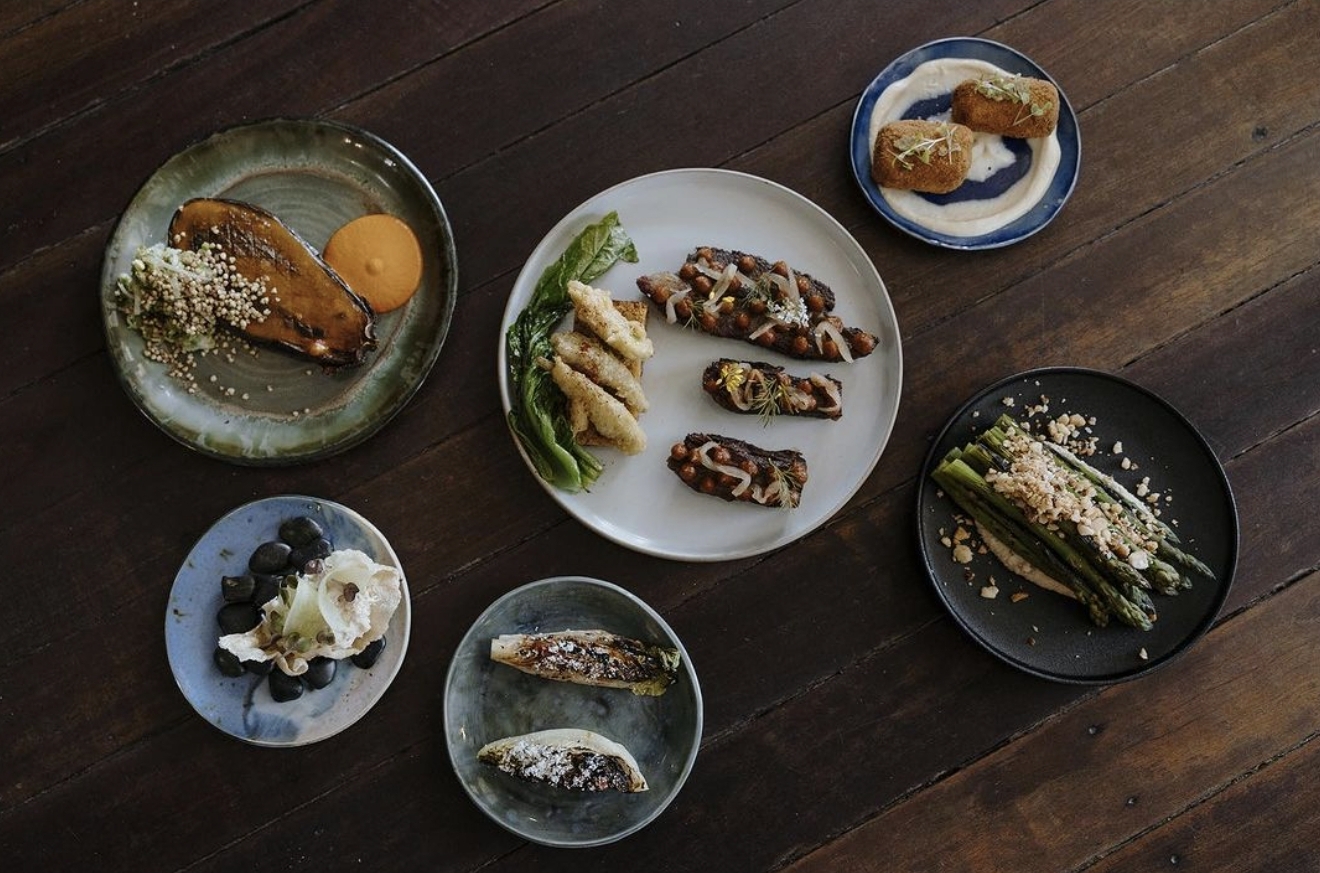
Customers have a variety of choices to choose from their menu including a few selections under bar tapas (made for small share plates) dishes like fried squid, grilled chorizo, baked sardines, and principales (designed for two), such as roast lamb shoulder, ribeye steak and many more to satisfy every plate.
The countless food selection encourages sharing, making it perfect for intimate gatherings or casual get-togethers with loved ones.
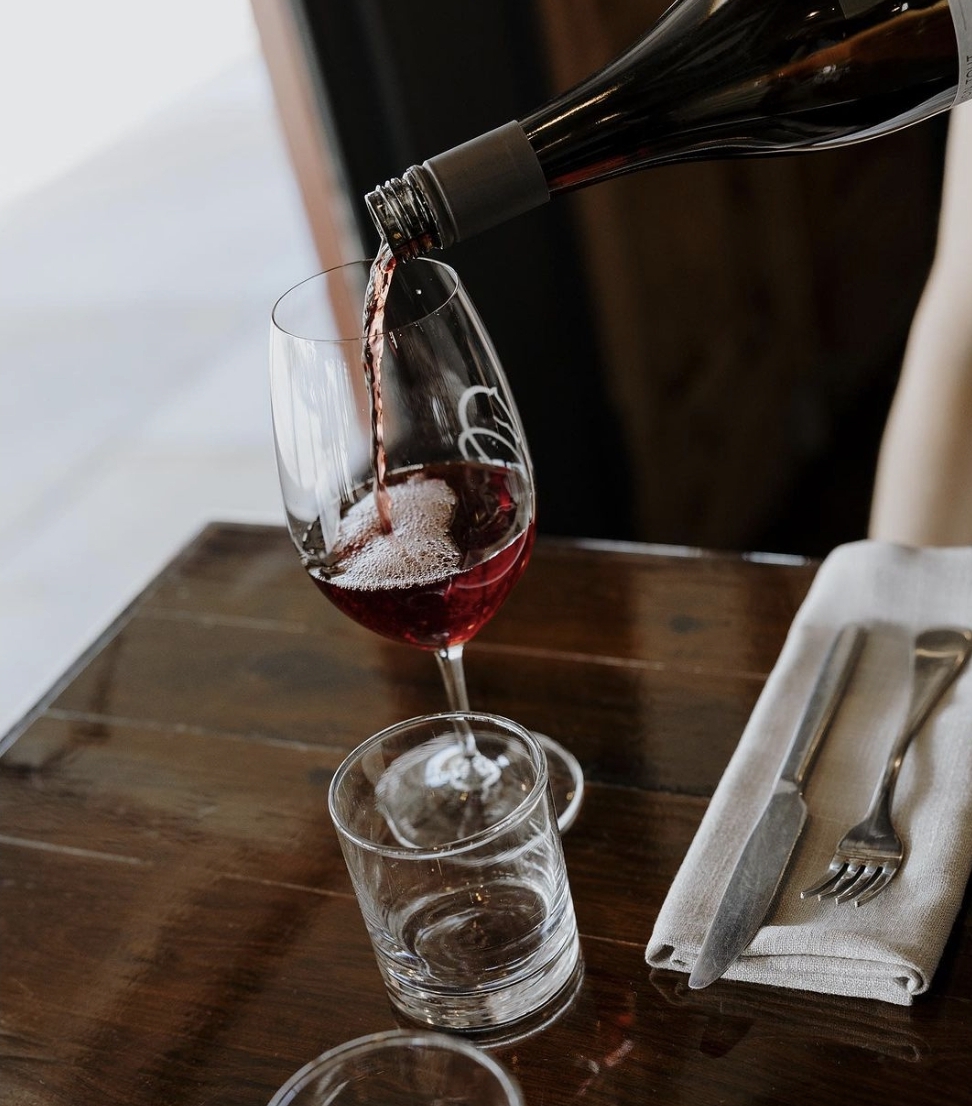
Complementing the food offerings is an extensive beverage list with wines, coffee, tea, smoothies, juices, milkshakes, cold beverages and even non-alcoholic beverages. Of course, they also have their house-made gelato for dessert.
EJ Station House provides a tranquil escape from the city hustle, inviting guests to unwind and relish in good food, fine wine, and delightful company that every local has to experience every once in a while.
Follow them on Facebook for opening hours, table booking and other updates.
Did you know that Rangemoor, a heritage-listed Robin Dods Queenslander, which represents a significant era in Clayfield’s architectural history, was recently sold for a remarkable sum of money? This transaction has not only set a new record for the suburb but has also caught the attention of locals and architectural enthusiasts alike.
In a carefully managed Top Offer campaign, Rangemoor was sold for an undisclosed amount after 30 days of intensive market activity.
This architectural masterpiece located at 165 Adelaide Street East, Clayfield was first built in 1907 and shows the influence of Brisbane’s first builder in its strong roofline, large verandas, and intricate woodwork.
Photo Credit: Website/Place New Farm
The house attracted huge bidder interest due to its prime location on one of Clayfield’s most recognized streets, its large block, and Brisbane’s architectural legacy.
The property’s deep historical roots and family-friendly atmosphere resonated with potential buyers, who were also drawn to the large grounds where kids could play.
Photo Credit: Website/Place New Farm
The house was designed to blend in. A central courtyard and single-level plan allow natural airflow and light into the apartments. When you enter, the formal and informal living areas blend smoothly. Beautiful French doors, 11-foot ceilings, and leadlight windows enhance the rooms.
Photo Credit: Website/Place New Farm
Sydney landscape designer Myles Baldwin’s 2018 plans for Rangemoor’s east and back gardens enhance the private suites’ luxury.
A young family looking for a legacy and home purchased Rangemoor. They value good schools and a safe environment for their children.
History of Rangemoor
In the late 19th century, John William Huggins Grout, initially a stockbroker in Brisbane, later became a prominent figure in the Queensland militia before moving to Dalby in 1900. He played a crucial role in forming the Dalby Company of the Queensland Mounted Infantry. Mr Grout returned to Brisbane in 1902, taking up various roles, including Vice-Consul for Spain.
During the early 1900s, Clayfield, along with its neighboring suburbs, emerged as prestigious addresses for the city’s elite families. In 1907, Mr Grout’s wife, Winifred, purchased an acre of land on Adelaide Street, where the renowned architectural firm Hall and Dods created “Rangemoor.”
Photo Credit: BCC
The Arts and Crafts and Art Nouveau movements had an impact on Mr Dods, an architect who improved Queensland’s traditional house design. His works in Clayfield/Ascot area include Lyndhurst and Turrawan, also known as the Clayfield House.
After Mr Grout died in 1918, the property changed hands, eventually being owned by Dr. Charles August Thelander, who chaired the controversial 1935-37 Royal Commission. Mr Thelander lived at Rangemoor until he died in 1959.
Over time, the property underwent alterations, including additions and subdivisions. Despite changes, much of Mr Dods’ original design remains, making Rangemoor a significant part of Adelaide Street East’s historical landscape.
At first glance, Wooden Horse restaurant in Clayfield looks unchanged as the same cosy cottage structure nestled into the neighbourhood. But inside, significant changes have upgraded this local favourite to fine dining destination under owners Chef Nick Alba and his wife Ruby.
Since they have taken over ownership, some changes have occurred transitioning it from neighbourhood favourite to fine dining destination. That’s because Chef Alba brings world-class experience to match the charming atmosphere.
Chef Alba and his wife met whilst both working in hospitality in 2014. As he trained under Gordon Ramsay in London and helped lead restaurants like Maze Grill, his hunger grew to one day run his own venue.
Chef Nick Alba and wife Ruby (Photo credit: woodenhorserestaurant.com.au)
The couple moved to New Zealand in 2016, allowing Chef Alba to further hone techniques in Nordic cuisine and contemporary European styles at some of New Zealand’s top eateries.
Photo credit: Wooden Horse Restaurant/Instagram
From there, Chef Alba’s distinct flair and ethos for ultra-fresh local ingredients took root. So when the couple returned to Australia in search of the perfect restaurant to make their mark on, they realised they already had a strong connection to their hometown gem after Alba grew up nearby and knew Clayfield well.
Photo credit: Zhuzhu Chen/Google Maps
Though Wooden Horse retained its quaint interior and warm service, Chef Alba has implemented the skills gathered across the globe into elevating the menu from reliable Mediterranean dishes to inventive degustation experiences with seasonal Australian ingredients as the stars. Diners now sample his takes on everything from smoked honey tarts to caramelised pork belly fresh out of the wood-fired oven.
Photo credit: Wooden Horse Restaurant/Instagram
The Albas have also cultivated specialty cocktail and boutique wine lists to perfectly pair with the seasonal menu.
Photo credit: Wooden Horse Restaurant/Instagram
The neighbourhood cottage’s charm remains but it now offers cuisine on par with Brisbane’s top trendy establishments – and not simply because of technique but thanks to the new owners’ hospitality passions coming full circle.
From Maze Grill to New Zealand darling eateries and now to Clayfield, the journey has made Wooden Horse an even brighter light among the vibrant Brisbane dining scene.
Visit their website to learn more about their new fine dining menu.
The abrupt announcement of the closure of My Mistress Cafe in Clayfield surprised loyal patrons. Speculation swirled among the community after its owners, Natalie Vostok and Rhiannon Redmond, shuttered the popular cafe’s doors without notice.
On Thursday, 22, Feb 2024, an air of uncertainty loomed as customers arrived at the cafe only to find the establishment inaccessible.
Well-loved for its delectable fare, My Mistress Cafe boasts a substantial social media following. However, there were no indications that the site had closed, prompting concern and confusion among its dedicated clientele.
Despite the sombre atmosphere surrounding My Mistress café, a glimmer of hope emerged on Friday, 23 Feb 2024, with the appearance of a mysterious message in the café’s window.
Photo Credit: Google Maps
Alongside the customary “Sorry, we are closed” notice, a new message written in bold red ink captured the attention of passersby.
“The door has not closed. In fact, it has now opened to new possibilities,” the cryptic message declared, hinting at a potential shift in the café’s future direction.
Despite repeated attempts, the owners have remained elusive, leaving patrons and observers eager for further insight into the unfolding narrative of the café’s next chapters.
Health authorities are sounding the alarm over a looming surge in Ross River virus infections, a concerning mosquito-borne illness. The rising number of infections has prompted mosquito spraying initiatives in high-risk suburbs, such as Wooloowin, Clayfield, Gordon Park, and Hendra in the northern suburbs of Brisbane, among other areas.
Chief Health Officer John Gerrard revealed a very high number of Ross River virus detections in mosquitoes across nine different council areas stretching from Mackay to South East Queensland.
And the number of infected mosquitoes — at 31 positive traps of the 700 tested across the state — is higher than what was detected during the horror 2019-2020 summer, ultimately leading to a whopping 3381 Ross River infections for that year.
There were 699 cases of the Ross River virus in 2023. As of the end of January this year, 64 people have been infected.
Efforts to increased mosquito spraying are underway in Wooloowin and other North Brisbane areas.
About the Ross River Virus
There is no cure nor vaccine for Ross River virus, and whilst most people recover in a few weeks some people experience joint pain and fatigue months after infection.
Origin and Spread
Ross River Virus (RRV) is a mosquito-borne alphavirus that is endemic to Australia, Papua New Guinea, and the Pacific Islands. The virus primarily spreads through the bite of infected mosquitoes, notably those in the Aedes and Culex genera, which are common in these regions.
Symptoms and Treatment
RRV infection can lead to a range of symptoms, from mild to debilitating. Common symptoms include polyarthritis, rash, fever, fatigue, and muscle pain. These symptoms can significantly affect an individual’s ability to perform daily activities and, in some cases, can persist for months or even years. While there is no specific treatment for RRV, management of symptoms is possible through medication and physical therapy.
Epidemiology
The virus has shown a notable propensity for causing large outbreaks, particularly in coastal regions. The incidence of RRV infection varies seasonally and geographically, with the highest rates typically observed in areas with warmer climates and in proximity to bodies of water where mosquito populations thrive.
Prevention
Preventing RRV infection centres on controlling mosquito populations and minimising individual exposure to mosquito bites. Public health measures include community education on the use of insect repellent, the importance of wearing protective clothing, and the need to eliminate standing water around homes and communities to reduce mosquito breeding sites.
Global Health Perspective
RRV is considered a significant public health issue within its endemic regions. With climate change and increasing global travel, there is a potential for RRV to expand its geographical reach, making it a subject of interest for global health monitoring and research
Photo Credit: Unsplash
Elevated Risk and Intensified Efforts
Dr Gerrard expressed concern over the significant increase in Ross River virus detections in mosquito populations early in the usual season, particularly across a wide geographical area. This surge indicates heightened virus activity.
Typically, Ross River virus infections begin to surge with the arrival of rain and warm temperatures in December, reaching their peak in February and March. Moreover, it’s common to observe a notable increase in Ross River virus cases every three to four years, indicating a potential spike in infections.
With the current high mosquito numbers and recent surveillance findings, there is an increased risk of human exposure to mosquitoes carrying the virus throughout Queensland.
Metro North Public Health Unit entomologist Jon Darbro said in the past month it had been either wet or hot which added to the extra mosquitoes around.
Mr Darbro explained that the increased rainfall this season provides mosquitoes with additional breeding sites for laying eggs and larval development, resulting in larger mosquito populations. Warmer temperatures also contribute to heightened mosquito activity, accelerating their growth and the drying process of eggs. These conditions create an ideal environment for multiple mosquito species to thrive, as observed by many.
Metro North covers areas like Wooloowin, Clayfield and Hendra, which has intensified its spraying efforts in late January 2024.
More Mosquito Spraying for Brisbane and Gold Coast
Swarms of mosquitoes have inundated nearly every suburb across South East Queensland, with wet weather and warm temperatures creating the perfect breeding grounds for the flying pests. The unwanted buzz and bites have forced Brisbane City Council to spray an extraordinary 2,400 sites a week – a 140 per cent increase on the normal mozzie spraying schedules including seven aerial attacks in the past nine weeks.
Across Brisbane, 136 of 190 suburbs have been targeted and 24 on the Gold Coast. Redland City Council have increased their aerial treatments of mosquito larvae by 60 per cent making it the biggest year on record since 2016-2017. While Logan City Council, Sunshine Coast Council and Gold Coast Coast have also increased their spraying schedules.
According to the Queensland Health notifiable notifications data, dozens of mosquito-borne disease cases have been confirmed, including 29 cases of Ross River virus and three of dengue in the first three weeks of January.
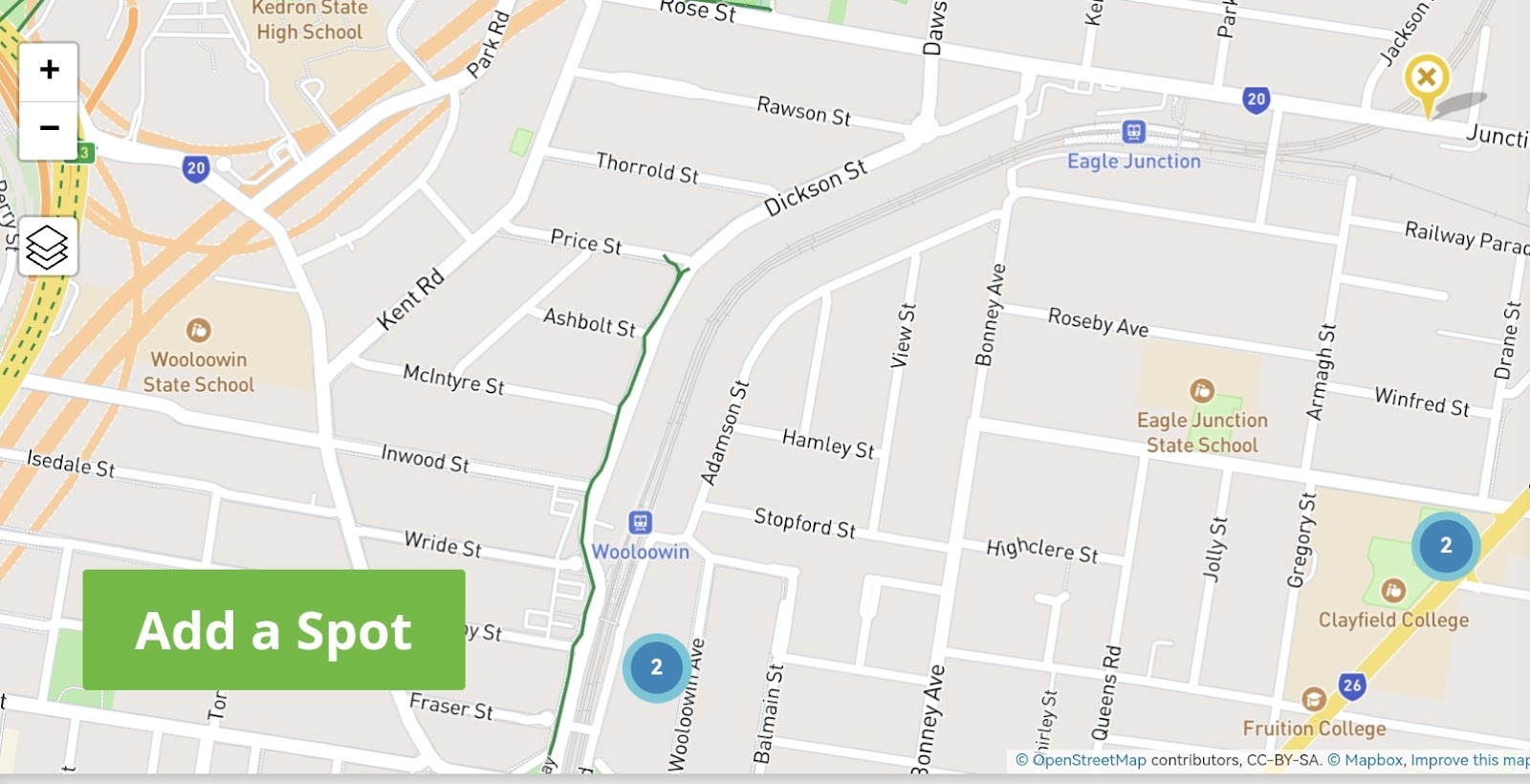
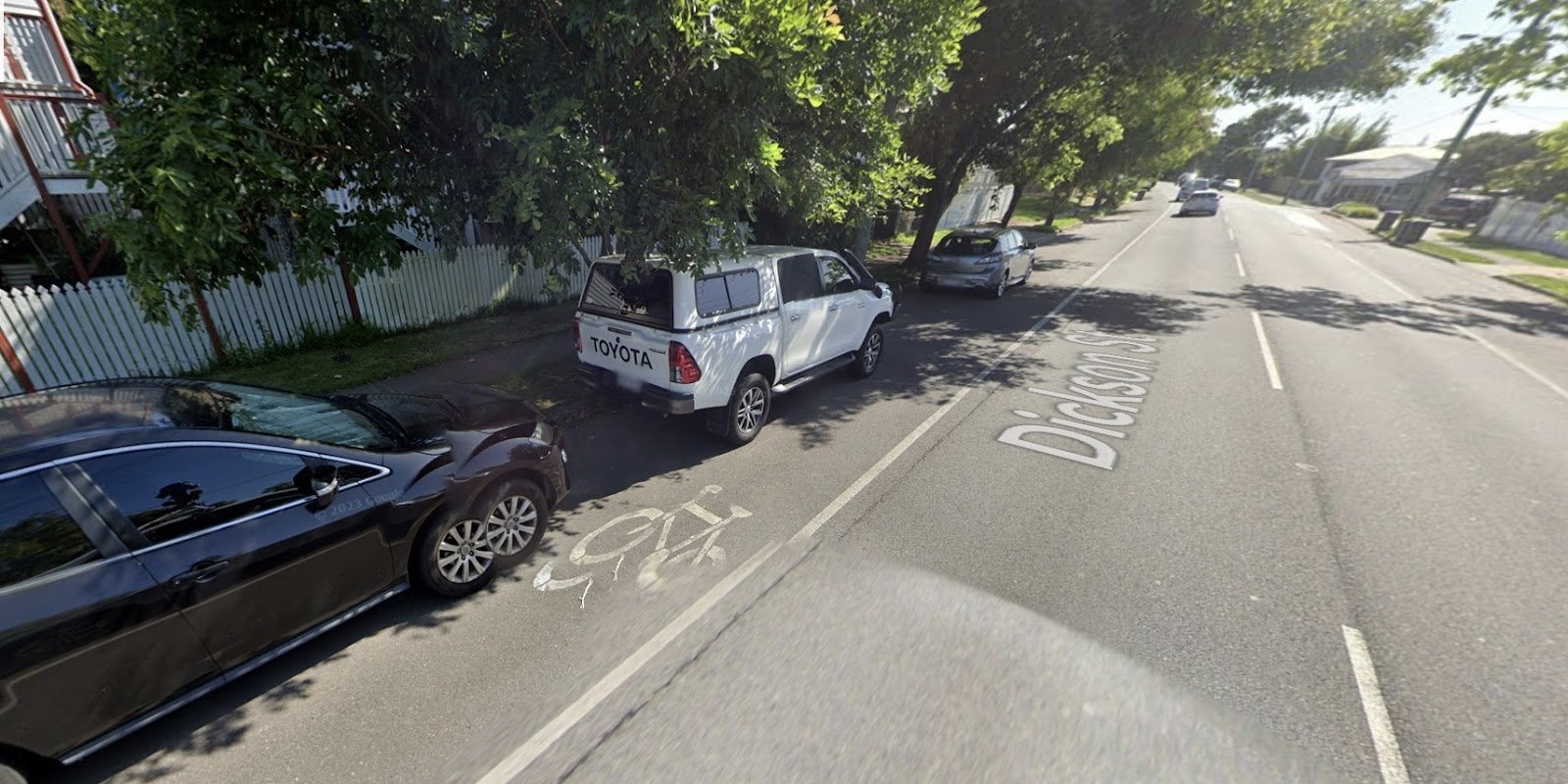
Dickson Street in Wooloowin has been identified as one of the 10 most dangerous spots in Brisbane for cyclists, according to newly released data from the cycling safety app BikeSpot.
BikeSpot’s 2023 Interim Safety Report, released last week, ranked Dickson Street as the number 3 unsafe area for Brisbane cyclists due to a lack of bike lanes and a missing link with the North Brisbane Bikeway.
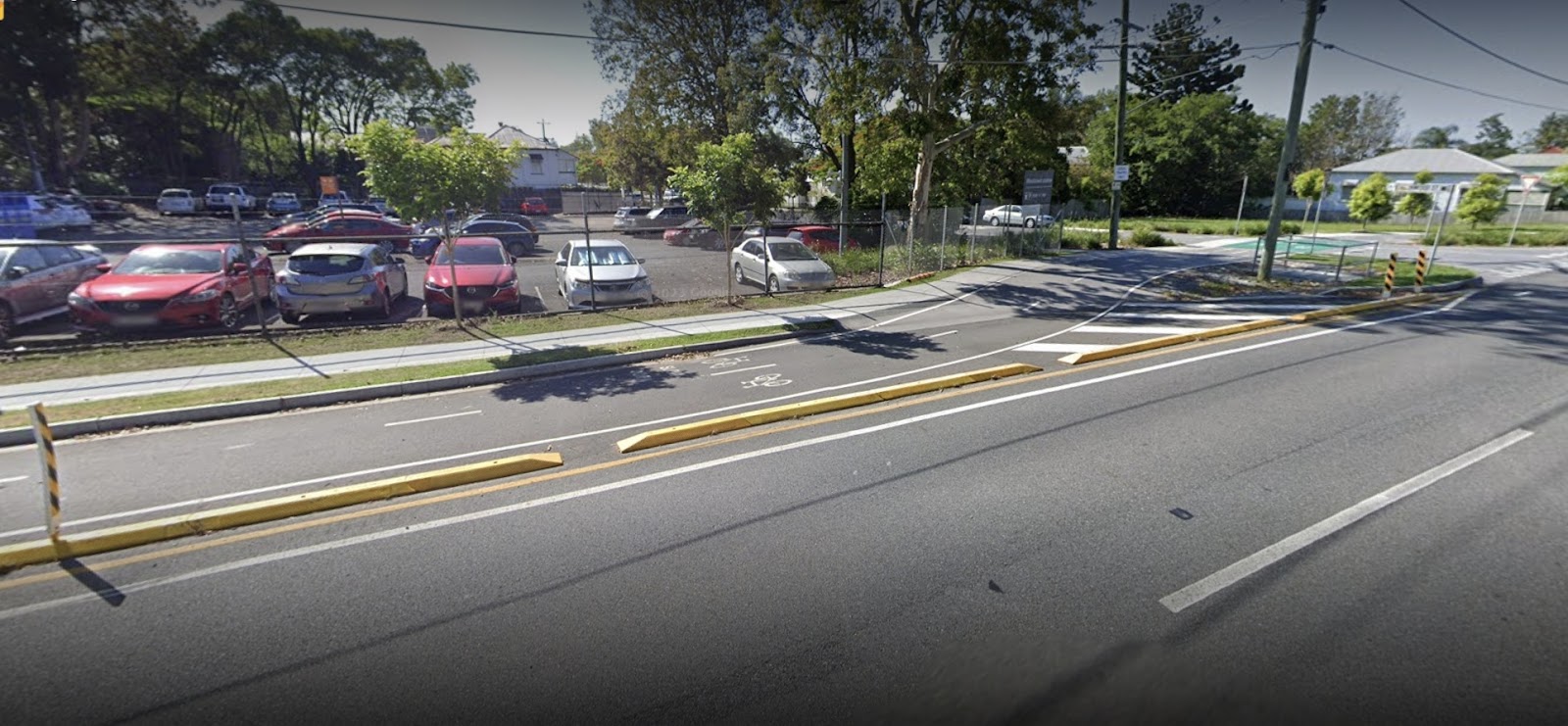
One BikeSpot user reported that riding south on Dickson Street was the “most dangerous section they have rode so far” because the North Brisbane Bikeway abruptly ends at Price Street, leaving cyclists to traverse Dickson Street without a bike lane.
Photo credit: BikeSpot map
“Bike lane ends, forcing bikes onto road or path,” one cyclist said. Others commented that there are lots of parked cars on the street.
Other cyclists agreed, saying the short section of the North Brisbane Bikeway is incomplete and leaves them feeling vulnerable when transitioning to Dickson Street.
Photo credit: Google Street View
Cancelled Project
The Brisbane City Council has announced the cancellation of several key cycling infrastructure projects, including the North Brisbane Bikeway extension, due to the devastating floods in South East Queensland in February 2022.
According to the council’s website, proposed plans to create a dedicated and separated bikeway along Dickson Street and Bonney Avenue, connecting stage four of the North Brisbane Bikeway to Junction Road, will no longer go ahead.
Funding has also been pulled from a project to build a “green street” with shared, low-speed active travel routes for cyclists and pedestrians along Keith Street, Sydney Street and Jackson Street.
Photo credit: Google Street View
The council said it made the difficult decision to redirect resources and prioritise the rebuilding and repair of roads, bridges, existing bikeways, parks and sports facilities across Brisbane that were damaged by February 2022’s catastrophic flooding.
“While the proposed project is not proceeding, Council is committed to working with the Department of Transport and Main Roads on the broader North Brisbane Bikeway network and future active transport connections in this area,” Council stated.
Cycling advocacy groups have expressed disappointment over the cancellations, saying the projects would have greatly improved safety and connectivity for Brisbane cyclists. However, the repairs from the destructive floods have been deemed a priority by local officials.
Students from Clayfield College, Brisbane Boys’ College, Somerville House, and Sunshine Coast Grammar School are poised to experience a unique blend of leadership and teamwork development at a newly acquired rural retreat in the Scenic Rim.
The Presbyterian and Methodist Schools Association (PMSA), which governs these four prominent South East Queensland schools, has recently purchased a significant property near Lake Moogerah.
This acquisition represents a strategic shift from the previously planned Outdoor Learning Campus at Mount Moon, as the PMSA seeks to provide more diverse and enriching educational experiences for its students.
Embracing Nature and Leadership
Located in the serene backdrop of Lake Moogerah, the new retreat promises a host of outdoor activities designed to foster practical and active learning.
The PMSA envisions this space as not just a site for physical activity but as a hub where students can connect with nature and each other, away from the distractions of technology.
This aligns with their broader objective of holistic student development, emphasizing Christian values and behavioural characteristics such as resilience, confidence, and leadership.
The PMSA’s decision to acquire this new property was driven by a desire to enhance and enrich the educational opportunities available to students and their families.
“Through this purchase, we will now have our own dedicated outdoor education facility that will support the delivery of a PMSA outdoor education experience,” PMSA Board Chair, Margaret Berry said.
This vision extends beyond the PMSA schools, as the facility will also be available to other schools and private groups after the completion of building works.
Building Towards the Future
Under the guidance of the PMSA, the new retreat will undergo refurbishment and remodeling to become a state-of-the-art outdoor education center.
Expected to be operational by 2025, it will serve as a dynamic environment for students to learn, adapt to changes, work collaboratively, and become better versions of themselves.
“Camp Moogerah gives us the capacity to operate a purpose-built facility that will enable us to facilitate a robust and comprehensive outdoor education program to meet the holistic needs of our students and support the long term needs of schools,” PMSA Chief Executive Officer, Shane Coppin said.
The PMSA schools regularly engage in a range of collaborative activities, from Christian fellowship to debating, sports, and leadership programs. These activities, now further supported by the new retreat, underscore the association’s commitment to building caring school communities and delivering exceptional education.
Here’s the scoop for all you festive fanatics and Christmas cheer chasers: St Mark’s Clayfield is running a Christmas Tree Festival, and guess what? You’re invited!
Mark your calendars for 25 Nov 2023, because from noon until the stars come out at 7:00 p.m., it’s going to be a holly jolly hullabaloo.
Tree-mendous Displays and Market Madness
First up, prepare to gawk at Christmas trees that are more dressed up than a penguin in a tuxedo. These aren’t your average, everyday festive firs; we’re talking about a forest of fabulously fanciful trees that’ll have your eyes popping.
And for those of you who love a good rummage, there’s a market that’s more packed than Santa’s sack. Local artisans are bringing their A-game with gifts and crafts so unique, even the elves would be jealous.
High Tea and Carol Capers
Feeling peckish? St Mark’s has got you covered with a high tea that’s so fancy, you might start speaking in Shakespearean English. Pinkies up, folks! And for the carol enthusiasts, warm up those vocal cords because there’s going to be carol singing. It’s the perfect chance to show off those shower-singing skills in public.
Sausage Sizzle and a Light Spectacle
What’s a party without food? There’s a free sausage sizzle, and let’s be honest, who doesn’t love free food? These sausages are hot off the grill and ready to jump into your belly. As the evening draws in, prepare for the grand finale – the Christmas lights turning on. It’s like an early New Year’s Eve spectacle but with less ‘bang’ and more ‘twinkle.’
Join the Festive Frenzy!
So, Clayfield folks and nearby dwellers, don’t be a Scrooge and miss out on this festive fiesta. It’s a chance to kick off the holiday season with a bang, or at least with a lot of twinkling lights and a belly full of tea and sausages.