Clayfield: Revisiting the Historical Places That Made This Suburb Great

Let’s revisit the historical places and heritage landmarks that have helped Clayfield evolve from a mid-19th century settlement to the highly desirable suburb we know today.

Clayfield: What’s in a Name?

The suburb’s name was derived from the “clay fields” in the mining town of Albion, where large deposits of clay were transported to Hendra and the neighbouring suburbs for brickmaking. This industry was vital to the growth of the settlements in the north. 

With settlements dating back to the mid-1870s, the Clayfield community started with the opening of a Baptist church catering to Clayfield and Hendra.

From the 1870s to 1901, allotments of subdivisions and estates were advertised and auctioned off with Clayfield turning into a locale with heaps of large residences rivaling that of homes in Hamilton and Ascot, where the old rich also settled. 

Clayfield’s appeal was underpinned by its elevation and accessibility to the racecourse and central Brisbane.

North Coast Railway

Stages in the evolution of Clayfield were marked by houses or structures that reflected the suburb’s progress and development. One of the developments that greatly influenced the placement of houses in 19th-century Clayfield was the North Coast Railway.

The North Coast Railway opened in 1882 with a line running from Clayfield, Eagle Junction, and Albion. The post office opened the following year. It did not take too long after that before European families started to build houses in the area.

Ralahyne

One of the most notable homes that were established during this period is the heritage-listed property, Ralahyne (1888) in Enderley Road. The house was also called East View, Nowranie, Koojarewon, and Huntington as it changed owners. 
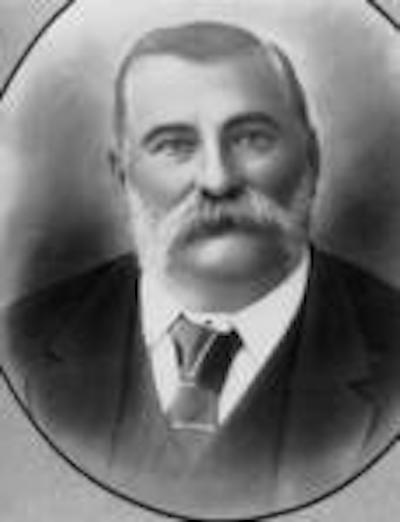
Clayfield resident Under Colonial Secretary Robert Gray
Under Colonial Secretary Robert Gray
Photo Credit: State Library of Queensland

The single-storey timber residence with iron roof stands on an eight-acre property that Under Colonial Secretary Robert Gray bought. George HM Addison designed the modest four-bedroom home, then known as East View.

The house had distinctive wide verandahs with cast-iron balustrading and frieze panels. On the north side of the house, the verandah opened to a large ballroom with dome ceilings and skylights.

Most of the rooms in Ralahyne had timber ceilings while the dining room featured moulded beams. The drawing room had a Carrara marble fireplace with two fluted columns. 

In 1904,  the firm of Halls & Dods renovated the house after Ada Laird bought the property from Gray. Three years later, Laird sold the house to Anne Millar and her family lived here until 1918.
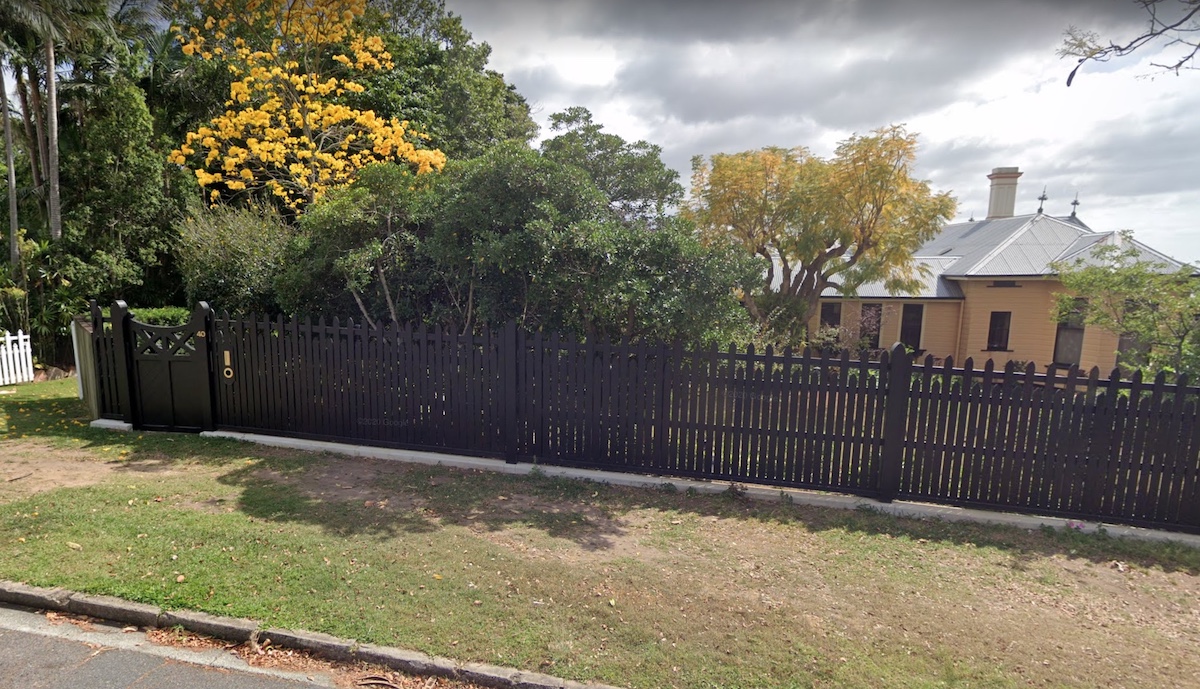
Ralahyne
A peek at Ralahyne
Photo Credit: Google Maps

Ruby Winten owned the property until she sold this to Henrietta Watson, who renamed the house to Ralahyne.
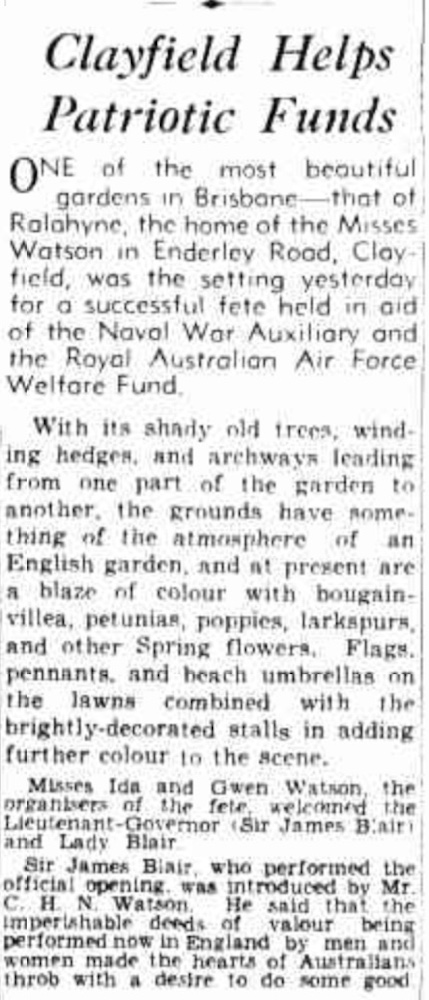
Story on fundraising social in Ralahyne
Photo Credit: National Library of Australia

Enderley Road Heritage Precinct 

The Watson family owned Ralahyne until 1985, when its current private owners bought the place. The property was subdivided several times during the various phases of ownerships, forming what is known today as the Enderley Road Heritage Precinct.  
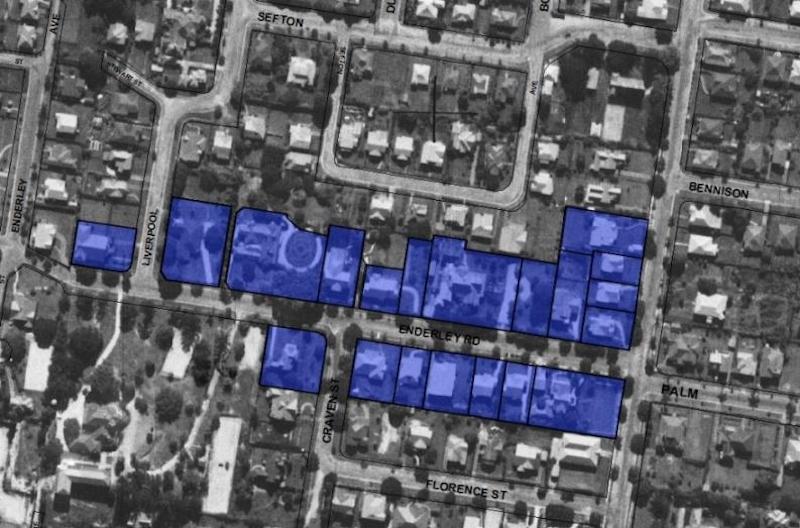
Enderley Road Heritage Precinct
Photo Credit: BCC

Clayfield and Ascot locals are proud of the homes in this precinct, including the surrounding street of Alexandra Road, for its aesthetic and historical value. Enderley Road became a model for historical architectural styles in Brisbane as the houses were designed by prominent architects and built during significant times in history — Federation 1890-1914, World War I 1914-1918, Interwar 1919-1939.

The housing styles in these prestigious locations included California Bungalow, Free Classical, Old English, Queen Anne, Spanish Mission. Aside from Ralahyne, the Delcotta house on Craven Street (formerly 51 Enderley Road) has been highlighted for its Tudor design. Delcotta was built around 1929 to 1930 for Mr A. Ure McNaught, a dentist, and his family. 

Delcotta House in Clayfield
Delcotta House, Clayfield
Photo Credit: University of Queensland Library

Incidentally, Clayfield has the largest concentration of Old English house designs in Brisbane at 18, followed by Hamilton (12), St Lucia (9), Ascot (8) and New Farm (6). Old English houses were deemed out of reach for the average Brisbane homeowners but some local architects believed it did not fit into the climatic and living conditions of Queensland. 

Fetlar, the California Bungalow, was designed by Chambers and Ford for Richard Baxter, who was regarded as a wool expert. He named the house Fetlar for his Scottish roots.
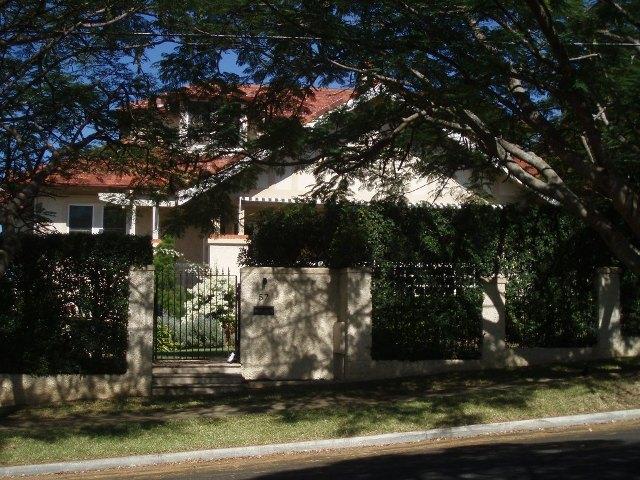
Fetlar House in Clayfield
Fetlar House, Clayfield
Photo Credit: BCC 

The Interwar house featured large hallways with spacious living and dining rooms. It has the classic elements of a housing style introduced in Australia around  1910, such as low pitched roofs with street-facing gables, roughcast rendering, and sleep-outs.

Baxter’s property was sold in 1965 to a private owner following his death.

Sandgate Road Electric Tram

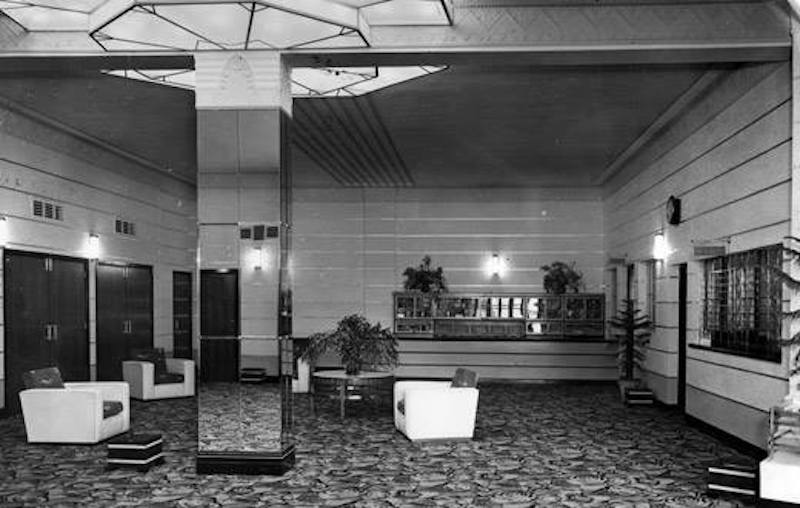
When the Sandgate Road electric tram opened in the early 1900s, Clayfield’s housing and building structures also flourished. Spanish mission-style buildings were becoming popular with the opening of the Savoy Theatre, which had a major art deco renovation in 1937. The building was characterised with bevelled glass mirrors and light fittings from sandblasted glass. 
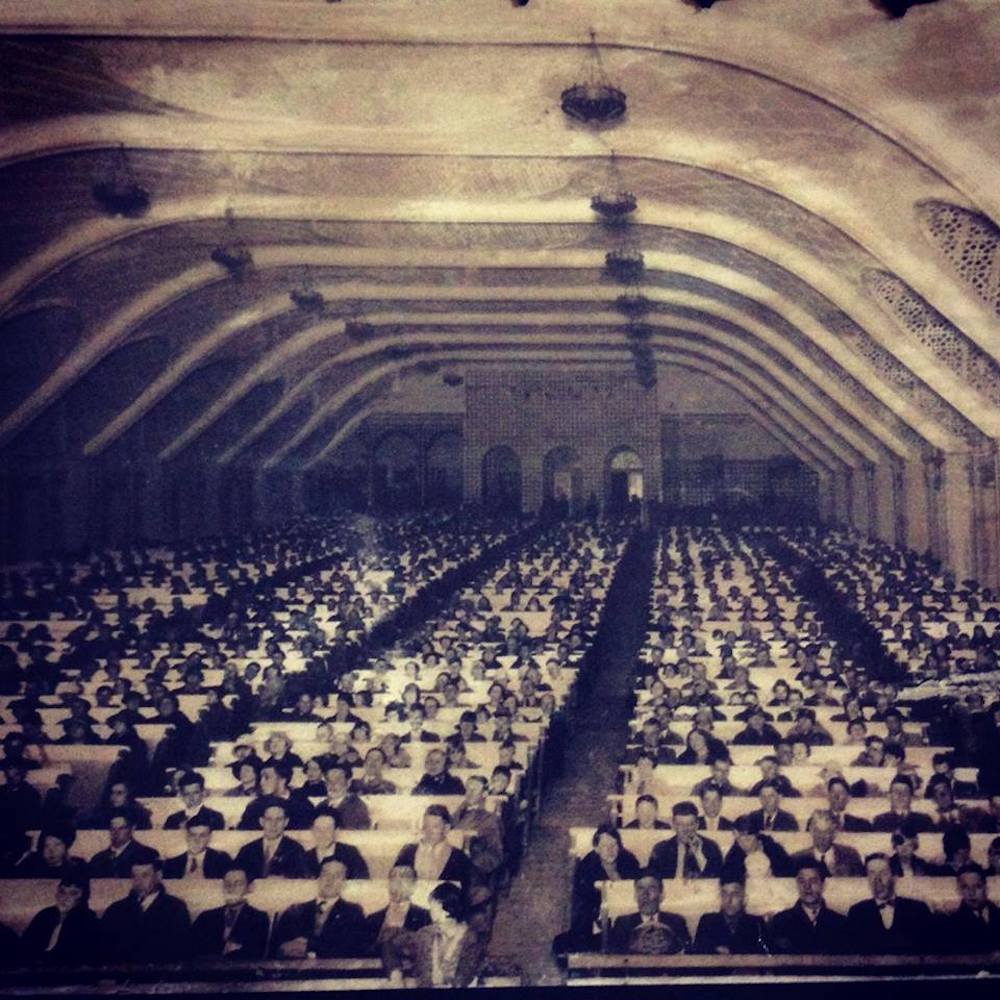
Old Savoy Theatre in Clayfield
Inside the Old Savoy Theatre
Photo Credit: Lost Brisbane/Facebook
Savoy Theatre foyer
The foyer at the Savoy Theatre
Photo Credit: Lost Brisbane/Facebook

Unfortunately, Savoy Theatre ceased to exist in 1962, in the advent of the popularity of television at homes.

Clayfield Schools 

From 1895 to 1926, a boom in educational institutions defined the suburb, beginning with the opening of the Eagle Junction Primary School.

Brisbane Boys’ College (BBC), now known as Clayfield College, started operating in 1902. 

BBC moved to its present site in Toowong when the school community had outgrown the campus, allowing Clayfield College to open a primary school on the site, which was named the Somerville House. By 1935, Clayfield College established its secondary school followed by its boarding school a decade later. 

Clayfield College continued its expansion amidst the construction of the tunnels in Sandgate Road to provide access to the east of Brisbane. The school bought the former Turrawan Private Hospital and increased its boarding facility. 

Turrawan Private Hospital
Photo Credit: BCC

The heritage-listed Turrawan Private Hospital is a two-storey masonry building designed in the Interwar Georgian Revival style by prominent local architect Eric Percival Trewern. It was regarded for its high level of care. Matron Amy Olive Aitkin sold the hospital in 1971 but it continued to operate as intended until Clayfield College took ownership.

In 2023, Clayfield College will begin its transition to co-educational learning.


Meanwhile, other Anglican churches in the suburb also built their own schools, such as St Marks in Bonney Avenue, St Michaels in London Road, and St Rita’s College in Enderley Road. St Rita’s College was established in a former house built for produce dealer John William Forth and his wife Selina. 

Outside Stanley Hall in Clayfield
Stanley Hall
Photo Credit: Wikimedia Commons 

Stanley Hall, now a heritage-listed property, went through different stages of construction. Most of the building’s rich ornamentation was retained, including the elaborately detailed Dutch gables.

Inside Stanley Hall in Clayfield
Inside Stanley Hall
Photo Credit: Wikimedia Commons 

Stanley Hall has grand rooms with interlinked modest service rooms. The main entrance is marked by stained glass surrounded by a hibiscus motif, alongside a cedar staircase with carved balusters and fine timber panels. Stanley Hall also has free-flowing wrap-around verandahs. 

St Rita's College in Clayfield
St Rita’s College
Photo Credit: Wikimedia Commons 

In 2021, St Rita unveiled its new state-of-the-art Trinity Learning Centre.


By the 1970s, many of the suburb’s lavish dwellings, especially around Bayview Terrace were turned into units. Property prices rose when the shopping strips filled with essential businesses were established. 

For the 12-month period ending September 2021, Clayfield’s median house price sits at $1,380,00 and the median unit price is at $400,000, according to Property Market Updates


Clayfield College Upgrades Continue, Science Lab Now Being Updated

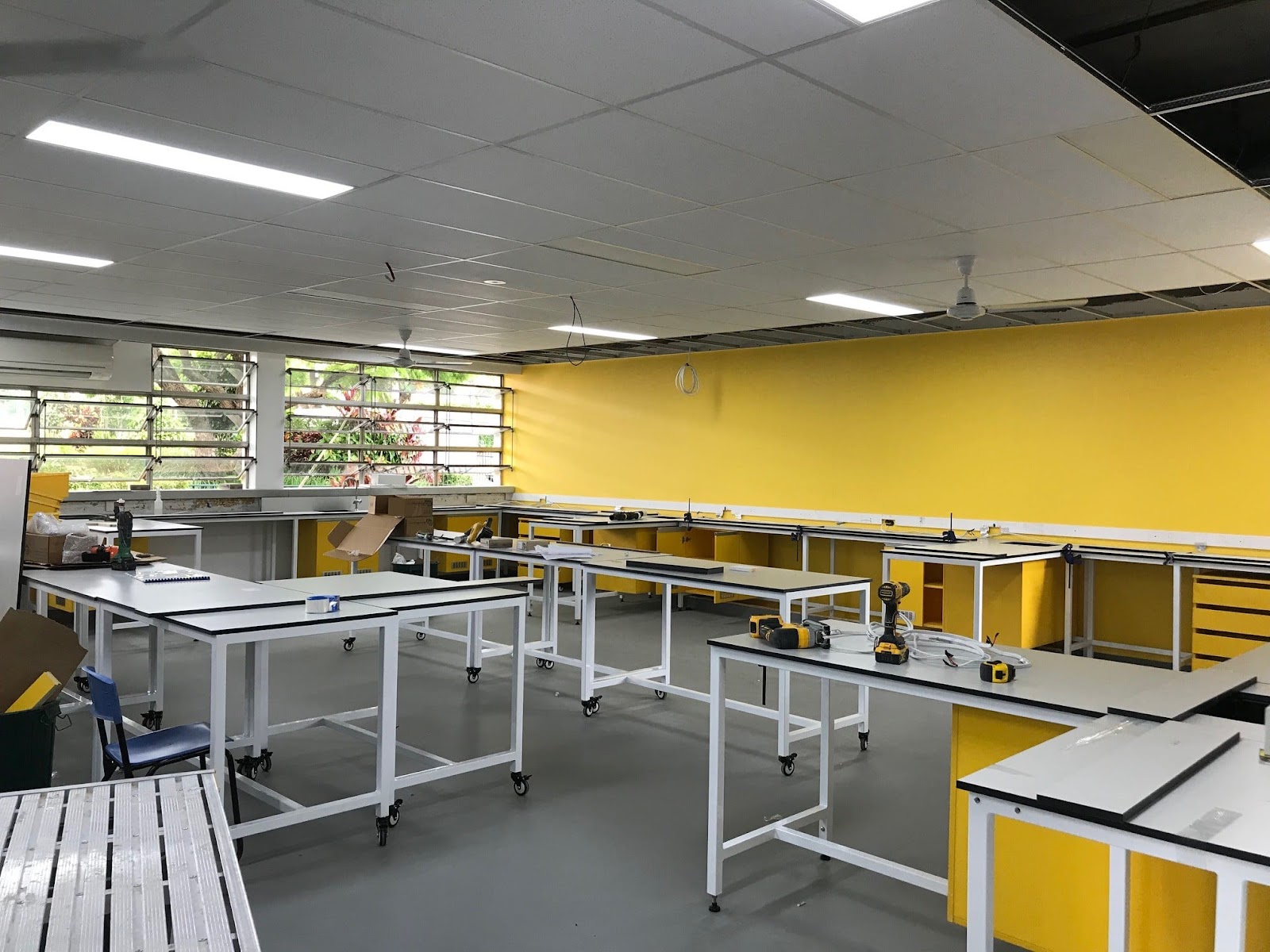
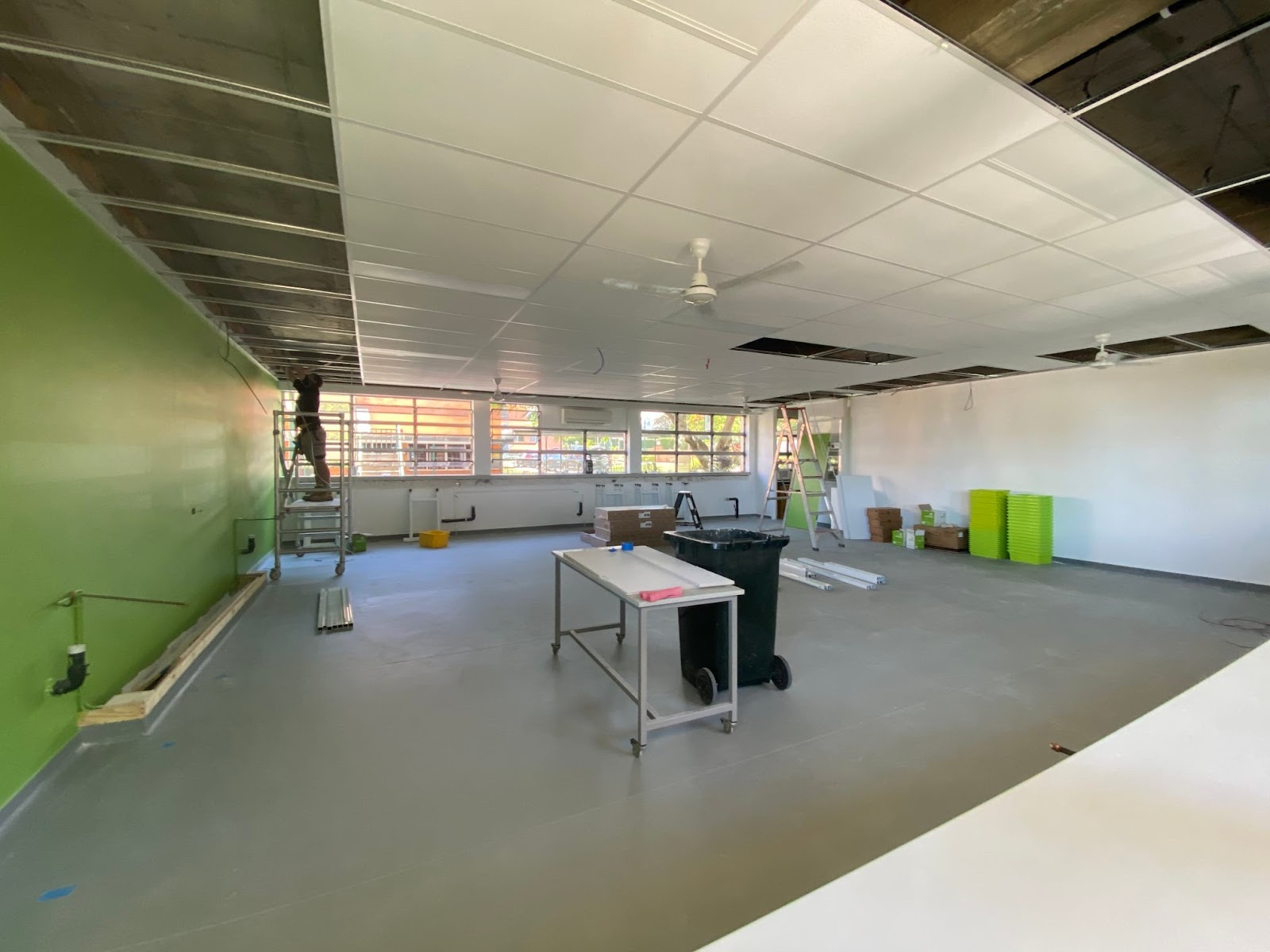
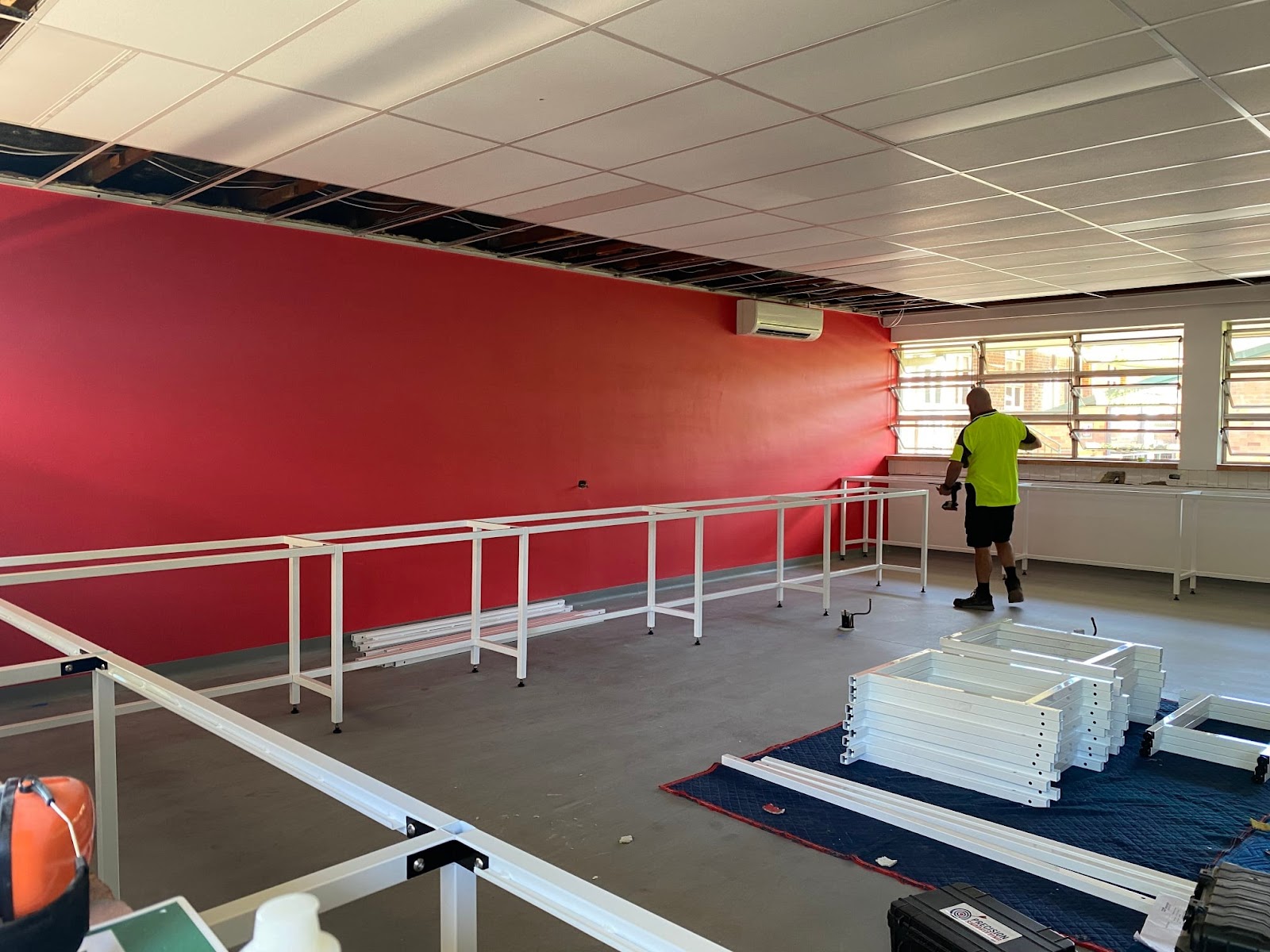
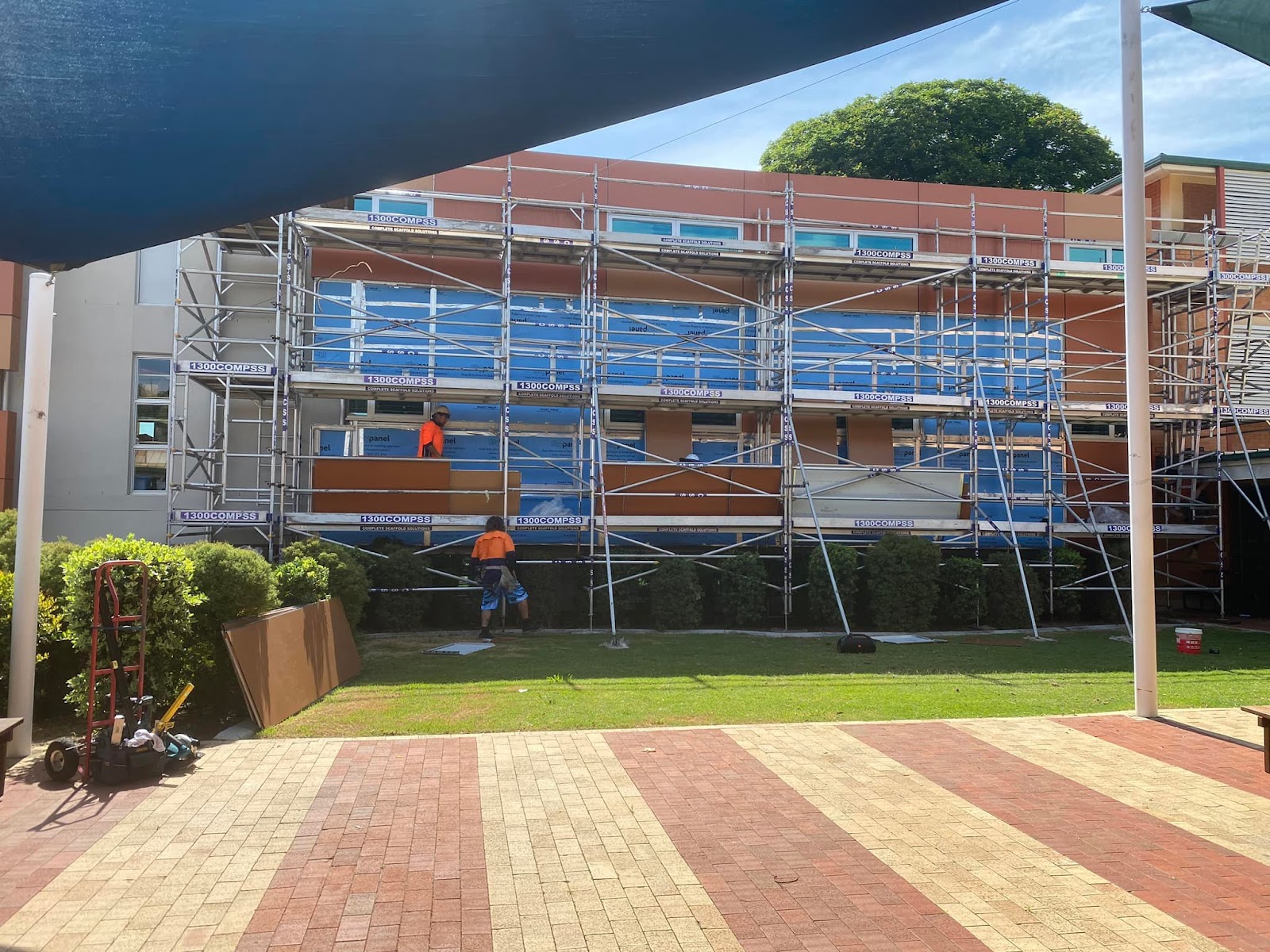
At Clayfield College, upgrades and building works continue, with the science laboratories now being updated, following the completion of a competition-size tennis court in mid-2021.


Work on the science labs started in mid-December 2021 with plans to paint each room with different colour themes. New furniture, cupboards, and equipment to match the upgraded rooms will also be installed before the new school term starts. 

Science lab upgrades
Installation of panels
Science lab upgrades

Whilst this is ongoing, MondoClad installation will also continue in the Year 7/8 Building. MondoClads are energy-efficient, low-maintenance solid aluminium panels that can withstand the harsh Australian environment. 

Clayfield College building work

According to Dr Andrew Cousins, the principal of Clayfield College, the campus refresh is expected to enhance student learning.

Apart from the new tennis court and the upcoming science labs, the campus also underwent a refurbishment of the Assembly Hall, and the welcome wall on Bayview Terrace last year.

The next phase of the renovation, set for the June/July 2022 school holiday, will include the demolition of the Whitesands Apartments, Vacant House and Maintenance House. 

“While these three buildings may be Clayfield College landmarks, they have reached the end of their useful life,” Dr Cousins said.

“Their removal provides a starting point to modernise and visually open up the campus. At this point in time, the areas left by the buildings will, for the most part, provide additional green space for our students.”


The campus refresh received support from the P&F Association and the Old Collegians’ Association and Foundation.

These upgrades come as Clayfield College is set to transition into a coeducational institution in 2023. Director of Corporate Services Director of Corporate Services Mr Dan Drewe also said that they school will be releasing a new Strategic Vision for 2022 to 2025.

“Building on our rich 90-year history, this will be a period of growth and development for our College, and we can’t wait to share this journey with our Clayfield family.”

Clayfield College Fully Transitions to Coeducational Learning Beginning 2023

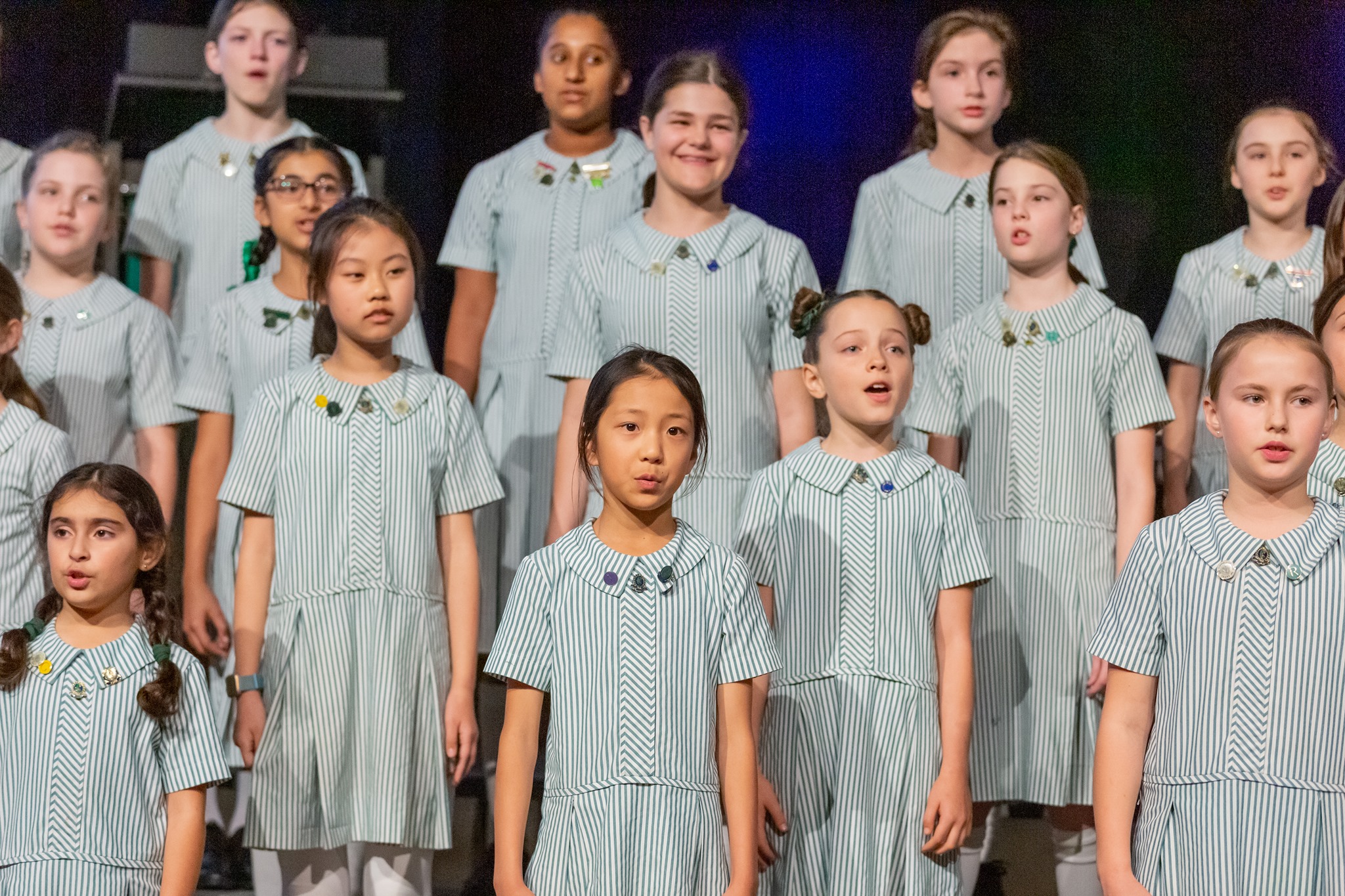
Clayfield College, one of Brisbane’s most prestigious private schools for girls from Year 7 to Year 12, will fully transition to a coeducational learning environment with a Parallel Learning model.


In a statement to parents, the administrators of Clayfield College revealed that the transition will be introduced in 2023 and will take place for five years, allowing incoming Year 7 students of all gender to enjoy “the best of both worlds and benefit from the Parallel Learning model.” 

“Year 7s will begin single-sex learning streams, continuing through Years 8 and 9,” the statement read. “In Year 10 students come together for selected classes, and then benefit from fully coeducational classes in Years 11 and 12.” 

Principal Dr Andrew Cousins confirmed that the school’s dwindling enrolment was a factor in the decision to shift to coeducational learning. Surveys conducted by the school showed that modern parents do not find any value in having a coeducational model from prep to Year 6 and then an all-girls model from Year 7 to Year 12. 

At least 40 percent of parents supported the move to co-ed as it would also mean no more separate school drop-offs for siblings, especially since their sons in the lower levels would prefer to remain in Clayfield College for their secondary education. 

Photo Credit: Clayfield College/Facebook

Experts said that the students may benefit from having a diverse learning environment since genders learn to co-exist in real life. 

Dr Cousins expect there will be at least 250 male students when Clayfield College fully transitions to coeducational learning in 2027. The school’s current population is below 500. Nearly a decade ago, there were more than 800 students a year. 


Clayfield College, under the Presbyterian and Methodist Schools Association, turned 90 years old in 2021. The school produced notable students like Jan McLucas (politician), Tania Major (Australian of the Year), and Stephanie Rice (Olympic gold medalist).  

Get Your Kids into Coding by Signing Them Up in Clayfield College’s Code Camp

Do your children love creating things? Are they always fascinated by technology? Sign them up for Clayfield College’s code camp happening from 9 April- 11 April where they will get to use their creativity whilst learning how to code.

Known as Australia’s highest rated school holiday camp, this event offers activities for children ages 5 to 13. Find out which camp suits your children based on their age and knowledge of coding:  

Little Heroes (April 10-11)

Photo Credit: Code Camp/Facebook

Designed for kids ages five to six, the camp will teach young ones the important steps to becoming creators of technology. This camp requires students to bring their own tablet that will be used for coding.

Other activities for this two-day camp include board games around coding and problem solving. Apart from online activities, kids will also have fun with offline activities prepared for them.

Spark (April 9-11)

Photo Credit: Code Camp/Facebook

Recommended for kids ages seven to 12, this camp can help young ones start their Code Camp journey regardless of their prior coding experience.

By joining this camp, children will walk away with their very own app playable via the Code Camp Community App on  iOS, Android or via any web browser. They will have an access to a range of video tutorials so they can continue coding at home.

3D World Builders (April 9-11)

Photo Credit: Code Camp/Facebook

It’s the world’s first 3D coding platform designed for kids to code, create and build spectacular worlds and apps. This camp is designed for children ages eight to 13 or those who have completed Spark and are ready to take on the world of pure JavaScript.

Designed for advanced learners, this camp will provide children with a solid understanding of Javascript and a confidence of being a Blast 3D graduate.

For booking details and further information about each camp, visit the Codecamp website or follow them on Facebook.

Coding for Brisbane Kids

In 2016, the Queensland Government reviewed the Science, Technology, Engineering and Mathematics (STEM) education in Brisbane state schools. One of the main findings of the review confirms a need for more research in the emerging areas of engineering and computer programming in schools.

The Department of Education launched #codingcounts and have introduced robotics in schools and the use of digital technologies to answer questions and real world problems.


Clayfield College Student Among 2018 Premier’s ANZAC Prize Winners

Isabelle Jardine, a Year 11 student from Clayfield College, has been announced as one of the eight winners of the  2018 Premier’s ANZAC Prize who will travel to Villers-Bretonneux, France this month.

Photo credit: www.clayfield.qld.edu.au

Queensland Education Minister Grace Grace announced the eight students and two teacher chaperones selected for the 2018 Premier’s ANZAC Prize on Monday, 15 January 2018.

Ms Grace represented Premier Anastacia Palaszczuk when she met with the prize winners at the State Library of Queensland where the students participated in a two-day Young Historians’ Workshop in preparation for their trip to the site of the Western Front this month.

Once-In-A-Lifetime Opportunity

The Anzac Prize students laying a wreath at the dawn service at Villers-Bretonneux, France on 2017. Photo credit: anzac100.initiatives.qld.gov.au

Jardine and her fellow prize winners will be given a chance to experience the ANZAC tradition firsthand. The students and their teacher chaperones are set to travel to London and the Western Front to visit key sites in Australian war history.

On ANZAC Day, 25 April 2018, they will attend the historic centenary dawn service at the Australian War Memorial at Villers-Bretonneux, France which will allow them to pay their respects during the commemorations. They will also be among the first visitors of the Sir John Monash Museum which will open its doors to visitors on Tuesday, 24 April 2018 just in time for ANZAC Day 2018.

ANZAC Commemoration

“ANZAC”, which stands for Australian and New Zealand Army Corps, was the name given to a combined force of First Australian Imperial Force and New Zealand Army troops who landed on Turkey’s Gallipoli Peninsula on Sunday, 25th of April, 1915. ANZAC Day is a solemn public remembrance of the anniversary of the landings.

Veterans march on Anzac Day, Brisbane, 1937. Photo credit: State Library of Queensland/Wikimedia Commons

After more than 100 years, the high school students are remembering the bravery and sacrifices made by many Australians and New Zealanders in Gallipoli and on the Western Front.

Premier’s ANZAC Prize

The Queensland Government values the ANZAC tradition and has since sent 96 students and 18 teacher-chaperones to some of the most significant battlefields of the First World War from the first tour in 2013.

Education Minister Grace Grace (centre) Acting Director General Annette Whitehead (left of Min Grace) and six of the eight winners at the State Library of Queensland. Photo credit: statements.qld.gov.au

In a recent statement, Ms Grace said, “This award has effectively engaged our younger generation in understanding the Anzac tradition and how the Anzac spirit is instilled in the Australian way of life.”

The Queensland Anzac Centenary is also supporting this important initiative to keep the memory of the Australian and New Zealander servicemen and women alive.

Apart from Jardine, other students who won the Premier’s ANZAC Prize includes Fenlan Miller of All Saints Anglican School, Isaac Mabo-Edwards of Pimlico State High School,  Harry Packwood of Shalom College, Bundaberg, Jack Frey of St Teresa’s Catholic College, Lillian Ward of Tannum Sands State High School, Shana Coyle of St Monica’s College, Cairns, and Tyla Craven-Griffith of Kirwan State High School.

Travelling with Jardine and the other students are Mrs Jodi Pallett of Tannum Sands State High School, who is the lead chaperone, and Mr Tim McMahon of Christian Outreach College, Toowoomba.