The house was owned by Cameron Russell, who once led a campaign against Brisbane’s Airport Link project for its alleged effect on the worsening flooding in the city.
Mr Russell’s house, located at 45 Milman Street, Clayfield was swamped by floodwater several times, including once in 2015 following a three-hour rain and just recently, after the devastating flood in February 2022.
Mr Russell was a spokesperson for the Clayfield Flood Affected Residents Group, a group of residents who are impacted by worsening flooding allegedly because of the failure to undertake required mitigation works associated with the Airport Link project.
Photo credit: domain.com.au
Based on Brisbane’s Flood Map, his property is subject to high likelihood of flooding, which means there is a 1 in 20 chance (5 percent likelihood) of flood in any year.
Photo credit: brisbane.qld.gov.au
Public records indicate that Mr Russell was the latest owner of the property, after purchasing it in 2015 for $1.17 million. The State Government reportedly acquired it for almost $2.5 million in 2023.
Under Queensland’s voluntary flood buyback scheme, the relevant local council manages removal of the home and future use of the land once a property is bought back.
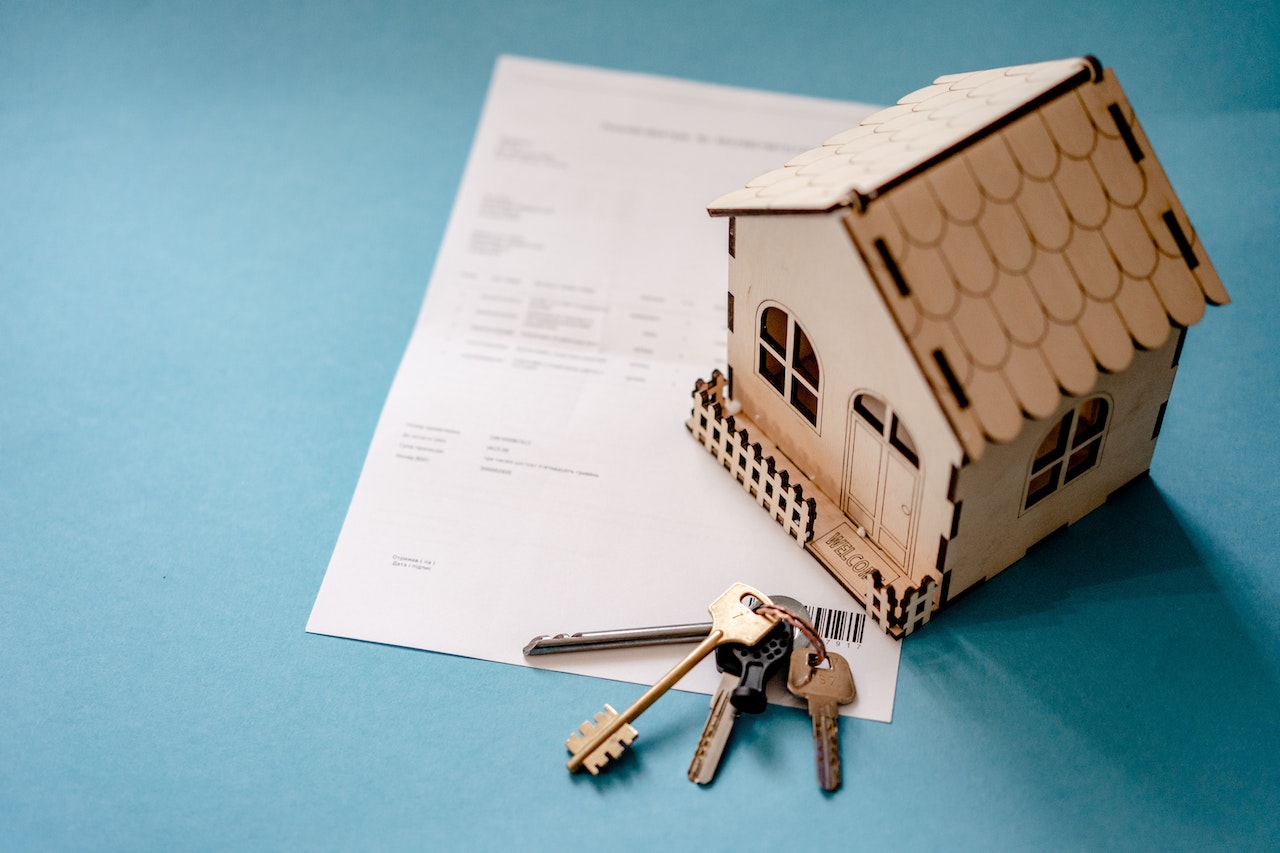
Photo credit: Oleksandr Pidvalnyi/Pexels
Whilst Council is involved in the execution of transactions, it’s the Queensland Reconstruction Authority (QRA) which makes the decisions in buying back the properties.
In addition to Mr Russell’s home, the State Government also acquired three other properties in the area for $1.7 million.
According to QRA, more than 210 properties throughout eight local government areas are currently identified for buy back, with 40 offers presented so far to eligible Ipswich and Brisbane residents.
The scheme is part of the Resilient Homes Fund, which comes with a $741 million budget. Of this, around $350 million has been allocated for buybacks, which is anticipated to buy 500 homes.
The transformation of the former site of the Sisters of Mercy Convent has begun. The development will deliver a new childcare centre set within the $180-million, master-planned Greville community.
Situated on Morris Street in Wooloowin, the 110-year-old convent building is set to be transformed into a 110-place childcare centre. An additional wing, single storey in height, will be constructed at the rear of the building where children’s play areas will be provided predominantly on its ground level, as well as between the building and the car park area.
Car parking that can accommodate 22 cars will be provided within the site’s front setback whilst access to the building will be provided from Morris Street and the car park.
Works at the site will also include changes to landscaping, new fencing, and clearing of vegetation.
Aerial perspective of childcare development at the former Sisters of Mercy Convent Site | Photo credit: Brisbane City Council / developmenti.brisbane.qld.gov.au/
The development will sit next to the Holy Cross Catholic Parish Church and Holy Cross Catholic Primary School. It is situated within the 3.688 ha site– previously owned by the Catholic Sisters of Mercy–where Cedar Woods plans to establish a housing community comprising 280 homes and a 4,000 sqm public park.
After acquiring the larger site Sisters of Mercy in 2015, Cedar Woods sold the 2,559 sqm portion of the site where the convent sits to De Luc Corporation in 2020 for $3.2 million..Cedar Woods said that off-loading the site would allow the company to focus on its integrated housing development.
The proposed hours of operation for the childcare centre will be 7 am to 7 pm, Monday to Friday.
As the temperature peaked at 37.4C on Friday, the 3rd of February 2023, Clayfield locals lost power in the afternoon and spent half of the day in the crippling weather.
Traffic lights were out on the streets, causing a build-up along Sandgate Road, Junction Road and Oriel Road. Outdoor activities for the weekend were called off or postponed as the extreme temperature became unbearable and unsafe.
Despite this, Clayfield Seafood Markets remained open but stall operators were unable to cook as they needed electricity for the customers’ orders. Visitors to the markets were also not able to use the internet.
Power was also out in a large section of Jamboree Heights, Middle Park, Warren Park and Beaudesert but Clayfield had the biggest outage in Brisbane with over 1,800 customers impacted.
However, Energex restored the power by the evening and reported no more interruptions in South East Queensland as of 8:00 a.m. Saturday.
Justin Coomber, the Energex spokesman, clarified that the outage was not because of the heatwave.
“The network is coping pretty well at the moment,” he said on Neil Breen’s radio show. “[They were] just run-on-the-mill outages on the network.”
Planned power outages for critical maintenance will also continue for the rest of the schedule. However, Commber also asked locals to call 131962 if they are still experiencing power interruptions so they could investigate if there are unusual incidents.
Coomber also said that the peak load of the network is usually between 4:00 p.m. and 8:00 p.m. when most people are back at home from work or school and are powering up all their appliances and gadgets.
Meanwhile, the Bureau of Meteorology (BOM) said that the heat is expected to cool down by early Sunday with the temperatures going back to average by Monday. On the other hand, Energy Minister Mick de Brenni said that they have been doing system tests to ensure that any issues with the power supply will be manageable.
Locals are advised to look after the vulnerables like babies, the elderly, and people with medical conditions, and make sure that they are in a cool, well-ventilated area.
Low to severe intensity heatwave conditions are forecast today and tomorrow for #QLD and #WA. With Fire Weather Warnings in WA and Thunderstorm warnings for SE QLD and NE #NSW
The Queensland Police Service has issued a warning about a new scam being reported across North Brisbane, that recently targeted a local business in Clayfield.
Senior Constable Diana Kratochvil said the police received information that a group of travelling men were alleged to be over charging, completing substandard work and using stand over and aggressive pressure tactics to attempt to secure payments.
With the new scam, victims are being approached to complete line marking services in car parks.
Photo credit: Queensland Police Service/Facebook
“The men have claimed to work for a line marking company which has since been found to be false,” S/Con Kratochvil said.
The men have been described by the Queensland Police as having Irish accents and driving a white Toyota Hilux utility with a modified tray.
Businesses who have any information regarding the scam are urged to contact local police. Members of the public are also being reminded to be cautious for scams.
The Australian Competition and Consumer Commission launched Scamwatch to help consumers and small businesses in recognising, avoiding and reporting scams.
Scamwatch emphasises that scammers are getting increasingly sophisticated in their attempts to get your money or personal details. Hence, it’s important to be alert and protect yourself from being scammed by following these tips:
Recognise the fact that scams do exist. If something looks too good to be true, it probably is.
Do a bit more research to check the legitimacy of a business. If you’re not sure about the legitimacy of a business or if you just met them online, take some time to do more research.
Don’t open suspicious messages. Immediately delete strange-looking texts or emails and don’t open pop-up windows nor click on links.
Ensure that your personal details are secure. When it comes to important documents and bills, shred them if you’re planning to throw them away or better lock them in your mailbox.
Did you know that The Residence, a long-abandoned retirement facility formerly known as the heritage-listed Kilcreggan home in Clayfield, will soon be transformed into a 30-unit housing complex for the public sector?
AA team has been tasked to upgrade the old building for community housing following the purchase of the property for $9.4 million. Significant work has apparently commenced on the house so it will be ready for moving in. The schedule for the completion of the upgrades is yet to be revealed.
The Clayfield retirement home is the heritage-listed property called Kilcreggan along Norman Parade. It used to be the residence of prominent people in Brisbane, such as John Leahy M.L.A. of the Queensland Meat Export Agency Co, Dr James McEneroe, Frank McDonnell of the McDonnell and East retail store.
“This complex will provide safe, secure and affordable housing for older adults, possibly including those who may be downsizing from larger social homes,” Housing Minister Leeanne Enoch said following the announcement of the public housing for tenancy-ready older adults or families who are looking to downsize.
“The character-filled property is close to public transport and shops and offers ample communal space, outdoor BBQ area with onsite parking.
“Further scoping work will be done to determine the final layout, while maintaining the property’s heritage and character.”
“We will support the tenants as they transition to their new homes and will consider on-site supports as part of our service delivery model,” she said.
“Our holistic approach means we are not just providing housing assistance, but also connecting people to supports from a range of government and non-government agencies that are specific to their individual needs.
These new social homes are just part of the record $3.9 billion investment in social and affordable housing by our government, helping us house more vulnerable Queenslanders sooner.”
Celebrating a year at Oriel Place in Clayfield, Dr James Allen and Dr Emily Allen, the husband-and-wife teambehind The Aesthetic Smile Collective,have brought very high standards to the area. Dentistry has become a major growth sector across Brisbane but the story of the Allen family can only bring a sense of respect for their passion.
When James was a kid, he had a very friendly and relaxed dentist whose process of attending was very much around avoiding pain and discomfort. As he got older, his passion to combine science and art in dentistry became stronger and the importance of the patient’s comfort in the chair remained.
Having qualified in Dentistry at King’s College, London in 2005, he and Emily crossed the globe and 16 years later, The Aesthetic Smile Collective was born in Clayfield, offering their combined 32 years of dental experience.
“Our main aim is to reduce the stress and anxiety that is so common with dental treatment, to enable our patients to avoid problems with their teeth and optimise their smiles,” Dr Emily said.
“As a family-owned practice, there is no outside influence from the dental corporates or health funds. For example, we invested in a 3D scanner which helps us avoid impressions and moulds in the process of creating crowns, bridges, veneers, mouthguards, or night-time splints. It is extremely accurate and is much quicker than traditional methods.” Dr James added.
The Aesthetic Smile Collective also offers “happy gas” to help patients feel more relaxed and interest-free payment plans where a series of planned dental treatments are recommended. Patients can be helped with early access of their Superannuation funds to help with more expensive plans.
Netflix is a great asset with children
Having two young children themselves, Dr James and Dr Emily know that there are many factors that can affect both parents and children from attending dental appointments. They can help with a wide range of issues such as helping with brushing techniques, fillings, cleaning, sports trauma and orthodontic assessment.
A TV on the ceiling above the dental chair can help patients feel more comfortable and zone out. It is great for children to be able to put their favourite Netflix show on.
The great Teeth Whitening debate
A very common question they get from patients is, “What is the best way to whiten my teeth?”
Dr James says, “There are many ways to whiten teeth and the two most common ways are home whitening and in-chair whitening.”
“Home whitening is the most common technique as it is something that can be done at home (1-2 hours per day or overnight). It can take 2-4 weeks to achieve the desired effect, has minimal sensitivity at an affordable cost.”
“In-chair whitening is done with a product called Zoom and this enables the teeth to be whitened in one appointment over one hour to a lighter shade. This can suit patients who are time-conscious or have teeth that are darker. There is some short-term sensitivity with this procedure which fades after 1-2 days. The cost is also higher compared to home whitening.”
Before Home Teeth Whitening Photo Credit: The Aesthetic Smile Collective After Home Teeth Whitening Photo Credit: The Aesthetic Smile Collective
New Technology to combat snoring and sleep apnoea
Recent research says that snoring and sleep apnoea have become prevalent in Australia. 5% of the population have severe sleep apnoea and a further 20% have it on a mild level. If left untreated this can have considerable effects on your health, including cracked and chipped teeth.
“We invested in a device called the Watchpat 200 Home Sleep Monitor. Patients can take it home for 24 hours, it slides onto one of your fingers and attaches to the patient’s wrist like a watch. It monitors sleep patterns and enables us to download the data afterward to advise our patients on the most appropriate treatment for them.”
Photo Credit: Supplied
Passion to optimise your smile
James’s decision to pursue a Master’s Degree in Aesthetic Dentistry from King’s College, from which he graduated in 2019, was born from a passion to optimise the smile.
“Aesthetic dentistry is a style of dentistry that enables natural-looking smiles with a functional foundation to ensure the work that is done lasts as long as possible. Cosmetic dentistry is different as the aim for that is to make the teeth appear whiter but often at a high cost to the underlying teeth structure,” Dr James said.
Before a Smile Makeover Photo Credit: The Aesthetic Smile Collective After a Smile Makeover Photo Credit: The Aesthetic Smile Collective
“The main dental problems which can be improved with Aesthetic Dentistry would be improving patient’s smiles through measures such as composite bonding, veneers, crowns, bridges, clear aligner therapy and dental implants.”
The Aesthetic Smile Collective is at Oriel Place at 531 Sandgate Road, Clayfield. You can see their website, which includes an online booking facility here.
Food Standards Australia has issued a major recall for a particular batch of eggs sold at Woolworths and IGA Queensland, Harris Farms in Clayfield and West End, and a number of independent food retailers due to possible Salmonella contamination.
Published on Saturday, 21 January 2023, the recall order warned of the development of illnesses from eating contaminated eggs sold by Watson Family Produce Pasture Raised Free Range Eggs. The items are packed in 350g and 700g containers marked with a “best before” date up to 25 Feb 2023.
Food Standards Australia said that consumers who have bought these products return their purchases to get a full refund. Those who have consumed the eggs, however, are advised to seek medical advice as soon as possible. Symptoms of Salmonella poisoning may include fever, diarrhoea, stomach cramps, nausea and vomiting, loss of appetite, headache, gastro issues and blood in the stool or mucus.
⚠️ Food Recall Notice ⚠️
700g Watson Family Produce Pasture Raised Free Range Eggs 350g Watson Family Produce Pasture Raised Free Range Eggs
In a statement, Watson Family Produce confirmed that a low number of Salmonella detections were identified at their chicken coop and packing facilities following a regular quality assessment from Biosecurity Queensland (BQ) and Safe Food Queensland (SFQ).
Watson Family Produce said they have voluntarily submitted to the process of a food recall and have launched precautionary measures after receiving a Queensland Health report that some consumers have been sick with Salmonella poisoning after eating their eggs.
“We will do everything we can to get back to normal supply and have our great product back into the market,” the company stated.
“We will continue to work closely with government authorities to help identify and trace a potential route of transmission into our property.
“SFQ and BQ have been absolutely amazing during this process and have supported us in every way that they can. We have spoken to more than a handful of vets surrounding this as well as our mentors.
“This isn’t the end of Watson Family Produce. We will survive this with your support.
“If you know us personally some love wouldn’t go astray at the moment. And if you’re a supporter of our business, please continue to be as we will really need it right now.
In 2022, as Australian developers faced construction challenges including rising costs and labour shortages, the $180-million Greville Wooloowin was put on an indefinite hold, along with several other projects in various areas that have been paused or cancelled.
Launched in 2020, Cedar Woods’ master-planned Greville Wooloowin was set to be the first project of its kind in Wooloowin. Once completed, the project will boast more than 250 terrace homes, apartments, and heritage residences plus an exclusive recreation zone with a pool, and a 4,000 sqm community park.
Whilst the project proved to be popular with buyers since its launch, the developer, however, had to “indefinitely delay” the project in 2022, to the dismay of buyers.
As to why the project was shelved, the company cited rising construction costs and labour shortages coupled with the southeast Queensland extreme weather event and extended construction timeframes.
Photo credit: Cedar Woods / cedarwoods.com.au
Cedar Woods offered to refund the deposits and the first choice once the project restarts, which they hoped to be in the second half of 2023. The developer also proposed that both parties agree to a mutual termination of the contract as the date of the resumption of the project could not be ascertained at the time.
Aside from Greville Community, Sirona Urban also cancelled its $165-million luxury tower development despite having sold off the plan more than 50 per cent of its apartments.
The firm blamed labour shortages and rising construction costs which they said had skyrocketed by 30 per cent in the past 10 months.
A $500-million apartment tower project in Surfers Paradise had to be abandoned as well by its Melbourne-based developer Central Equity as they deemed it no longer profitable.
Several construction companies likewise went into liquidation last year including construction giants Condev and Probuild. Development giant Caydon also went under last 2022 owing $200 million in debt and leaving behind 130 unsold apartment units in Melbourne.
And the list goes on.
According to CoreLogic, Cordell Construction Cost Index (CCCI) for Q3 2022 showed that in the year to September 2022 alone, national residential construction costs increased at a record rate of 11 per cent. It exceeded the 10 per cent rise recorded over the last 12 months to June 2022.
“This is an industry facing tough workload pressures against a backdrop of low labour supply, material shortages, rising interest rates and inflationary pressures,” CoreLogic Research Director Tim Lawless said.
“This new high in the cost of construction flows through to margins, unexpected costs for consumers and potentially lengthy delays to home owners who are waiting on the sidelines, often in rental or short-term accommodation, for the completion or possibly the start of their project.”
In early 2022 a mystery US buyer snapped up a mansion on Union Street in Clayfield to the tune of $8.2 million, making it one of the biggest home sales that year.
The new owner is reportedly wanting to move together with his young family from California to Australia due to the appealing safe living and working conditions.
Sold through Adcock Prestige by car enthusiast Mark Jansen on 28 January 2022, the property at 43 Union Street boasts of a championship-sized floodlit tennis court, indoor pool, spa and alfresco entertaining pavilion plus a car collectors’ showroom.
Last sold in 2015 for a cool $4.1 million, the mansion which underwent extensive renovation also features six built-in bedrooms, three of which are ensuite. The master suite has a private lounge, reading area, a large walk-in dressing room with dark wood grain joinery, a marble look tiled ensuite with skylight, dual Villeroy and Boch undermount basins set within a spotted gum vanity, and a walk-in shower, among other features.
The chef-inspired kitchen, meanwhile, contains an extensive range of Miele appliances with two full-sized ovens, a steam oven and a microwave. There’s also a stone breakfast bar servery and stainless-steel food preparation surfaces whilst behind the kitchen is a large walk-in butler’s pantry offering full-height storage with room for an additional fridge, freezer or wine fridge.
With an $8 million price tag, 43 Union Street is one of the biggest home sales of 2022.
The property at 673 Musgrave Rd, Robertson took the crown as the highest priced of them all with a staggering sale price of $17.25 million.
Dubbed as Robertson’s “last remaining large-scale development block”, the six-bedroom brick house was sold in March 2022 to a local developer, whose name was not revealed.
A development application that seeks to build a 2-storey duplex at the rear of ‘Canaipa,’ a cottage originally built in 1902 on Wooloowin Street, has drawn mixed reactions from the local community.
The subject site is situated at 42-44 Wooloowin Avenue and contains a pre-1947 detached dwelling. The Queenslander is undergoing renovation which owner Lynn Couchman said in her submission last 11 October 2022 is already nearing completion.
Several members of the community have expressed opposition to the proposal, however, including the “Save Our Backyards” group which cited that the “44 Wooloowin Avenue” development proposal as an example of bad development.
“If this development is approved, it will set a precedent for any backyard that is close to a train, bus or shopping centre. Slowly all of our suburbs will be filled with hot, soulless, cement boxes.
This development will overshadow surrounding neighbours, destroy privacy, create flooding issues, create parking issues and reflect heat to all adjoining properties.” – Save Our Backyards
Artist impression, proposed development on Wooloowin Street – Photo credit: Brisbane City Council / developmenti.brisbane.qld.gov.au
“There appears to be a lot of misinformation regarding this development, which is unfortunate,” Ms Couchman wrote in her submission.
Ground floor plan, proposed development on Wooloowin Street – Photo credit: Brisbane City Council / developmenti.brisbane.qld.gov.au
She added that there were many other options that she could have chosen, but she chose to preserve the cottage including the original fireplace and to build a duplex at the rear.
“All that I ask is that people take the time to review all the documentation and make their own decision regarding their support or opposition.” – Ms Couchman
In late October, Council issued an information request under the Planning Act 2016. The request outlined several issues found in the proposal including building height which the Council found the proposal to be unclear as to whether the rooftop terrace includes any third-storey components.
Level 1 floor plan – Photo credit: Brisbane City Council / developmenti.brisbane.qld.gov.au
The developer is therefore asked to provide an “amended plans demonstrating all third storey components (including the bathroom/laundry) on the rooftop terrace are setback a minimum of 10m from all adjoining and approved dwelling houses. And to provide “amended plans which include additional sections in all directions and clearly demonstrate the natural ground line on all elevations and sections.”
Roof plan – Photo credit: Brisbane City Council / developmenti.brisbane.qld.gov.au
Other issues needing a response from the developer include boundary realignment; bulk, scale and form; built-to-boundary walls; building separation; site cover; building design and traditional building character; privacy, private open space; landscaping and access, among others.
There have been 34 submissions so far, both opposing and supporting, regarding the proposal on Wooloowin Street.
“My wife and I are very much opposed to this proposal for a number of reasons. The key concern for me is inconsistency with the “look and feel of the area” and also inconsistency with the planning scheme and other planning documents.” – Anonymous
“I purchased my property at 50 Wooloowin Ave back in 2001. I was captivated by the beautiful 100 plus year cottages in the Avenue that form part of the remarkable cultural heritage display at Wooloowin Rail Station. I am dismayed to see the DA for 42/44 Wooloowin Ave, which if approved, will herald the demise of the ever-decreasing pocket of federation homes still surviving in Wooloowin.” – A. B.
“If allowed to proceed, the reduction in value to surrounding properties may well be of a similar or greater magnitude due to loss of neighboring building and environmental character (aka the addition of bulk and gross ugliness), loss of privacy, loss of views, loss of street amenity, increases in flooding risk and increase in noise pollution. The damage to the wellbeing and impact on the daily lives of neighbours cannot be estimated.” – Anonymous
“The proposed townhouse is not appropriate for the area. It flaunts all of the prescribed setbacks. It is made out of concrete instead of wood and tin, it is too high and it is ugly and ruins the streetscape. On top of this, it doesnt have any visitor parking and the proposed stormwater solution will cause flooding of the local area.” – Anonymous
“I have read the DA and agree that the development will be an improvement to the area and so I have no objections to this application.” – Anonymous
“The application meets the BCC Planning rules and requirements for the area and helps to deliver more affordable housing to the market, which is a key aim for SE Queensland at present. I look forward to seeing these properties developed in the near future.” Anonymous
“There’s not enough housing in wooloowin. I would have loved to buy a home in wooloowin but there is just so much competition that it’s impossible. Building more homes in wooloowin is the way to go!” – Anonymous